

Will a Solid Oxide Fuel Cell power strategy finally cut my energy costs without sacrificing uptime?
2025-12-11
When I first evaluated next-generation distributed power for an industrial client, I kept circling back to VET because their approach to the Solid Oxide Fuel Cell platform aligned with what my operations team actually needs: high electrical efficiency, real fuel flexibility, and hardware that behaves like an asset—not a science project. In this field note, I’m sharing what I learned while benchmarking a Solid Oxide Fuel Cell system for combined power and heat, why I’m leaning toward a staged rollout, and how I’m modeling risk so procurement can move fast without taking blind bets on a Solid Oxide Fuel Cell roadmap.
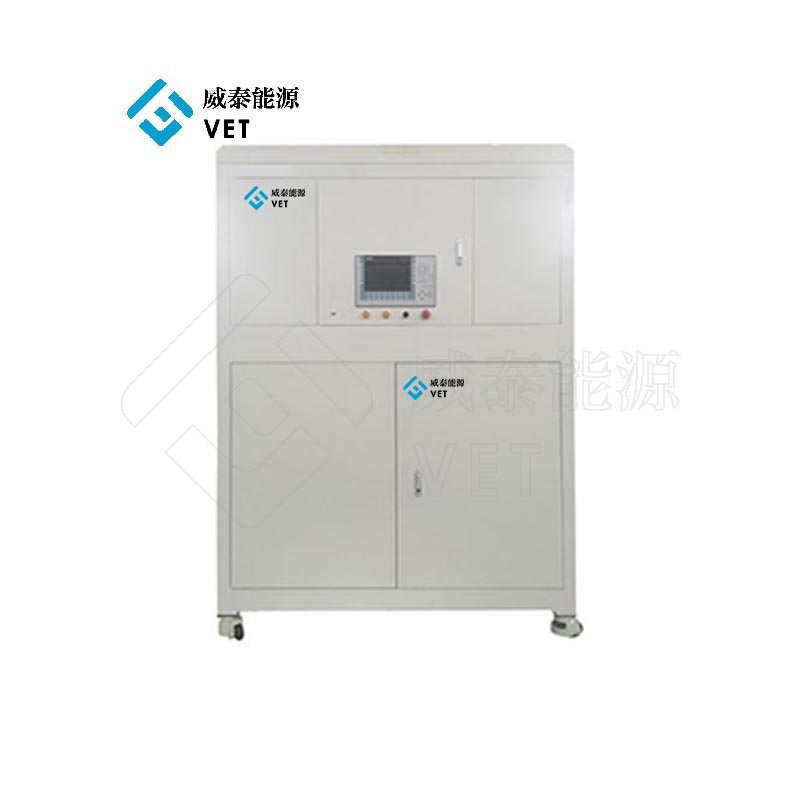
What makes a Solid Oxide Fuel Cell different in real-world plants?
- I can run on multiple fuels today and pivot later—natural gas now, hydrogen blends as they scale, or cleaned biogas if the site has it.
- High-temperature electrochemistry turns more of the fuel into electricity and usable heat, so I’m not burning margin in a flue.
- Fewer moving parts means lower vibration and quieter operation, which matters when my power room is meters away from people and instruments.
In short, a Solid Oxide Fuel Cell gives me electrical efficiency and thermal recovery in the same footprint, which is hard to match with small turbines or diesel gensets.
Where do the efficiency gains actually show up on my meter?
- Net electrical efficiency trends higher than typical reciprocating engines at comparable scale, especially in partial loads where engines often sag.
- Combined heat and power lets me reclaim high-grade heat for process water or space heating, trimming boiler runtime.
- Start-stay-stable operation avoids the peak-shaving drama; the stack prefers steady load, which fits my baseload profile.
Because the stack runs hot, a Solid Oxide Fuel Cell rewards sites that can use hot water or low-pressure steam. If I can monetize that heat, my blended efficiency and payback curve both improve.
How do I pick stack material and system configuration without overcomplicating the spec?
- Cell chemistry and seals: I look for proven materials with thermal-cycle resilience; thermal gradients during start/stop are what punish seals over time.
- Modularity: Skids I can add in parallel reduce the “big bet” problem—start small, measure, replicate.
- Fuel processing: Integrated reforming simplifies gas handling; I want fewer vendor boundaries and cleaner commissioning.
- Digital controls: I ask for open protocols so my SCADA doesn’t turn into a walled garden.
My rule of thumb is simple: standardize on a single, modular Solid Oxide Fuel Cell block and scale horizontally as loads grow.
What pain points worry buyers the most and how do I mitigate them?
- Stack life uncertainty: I negotiate performance warranties tied to hours and output, with a priced path for stack refurbishment.
- Thermal cycling: I plan fewer cold starts. Keeping a Solid Oxide Fuel Cell warm extends life much like a kiln—predictable and gentle.
- Gas quality: I specify filtration and sulfur removal up front; it’s cheaper than chasing performance drift later.
- Permitting: Emissions are typically lower than combustion, but I still get air permits moving early to avoid calendar risk.
- Capex optics: I map avoided costs—grid demand charges, boiler fuel, backup genset runtime—to show total value, not just sticker price.
Can I pair a Solid Oxide Fuel Cell with hydrogen, ammonia, or biogas safely?
Yes, with engineering discipline. I focus on gas cleanup, mixing controls, and codes. For biogas, I remove siloxanes and sulfur before the reformer. For hydrogen blends, I validate flame-free reforming limits and leak detection. The point is not to chase every fuel on day one; it’s to pick a path that future-proofs the plant while the ecosystem matures.
What does the five-year total cost picture look like if I start with a pilot?
Below is a simple framework I used to compare a 200–500 kW deployment against status-quo grid plus boilers. Values are placeholders to illustrate structure—you should drop in local tariffs, real heat recovery, and site fuel specs.
| Cost or Value Driver | How I Estimate It | Why It Matters |
|---|---|---|
| Capex per kW installed | Vendor quote plus balance of plant and interconnect | Sets depreciation and financing needs |
| Fuel cost per kWh | Gas price × heat rate minus CHP thermal credit | Defines variable operating cost for the stack |
| Stack service cycle | Hours to refurbish or replace modules | Determines planned downtime and service budget |
| Grid demand charges avoided | Historic bills × coincident peak reduction | Often the hidden win in high-tariff regions |
| Heat offset | Recovered kWth replacing boiler fuel | Turns waste heat into a line-item saving |
| Emissions credit | Local incentives or internal carbon price | Improves IRR when policy rewards lower emissions |
How do I commission and operate without turning my team into fuel cell experts?
- Pre-FAT discipline: I push for a factory acceptance test that mirrors my load profile and alarms. Problems solved in a vendor bay are cheaper than on my floor.
- Operator playbook: I train techs to watch delta-T, fuel quality alarms, and output drift—no heroics, just good hygiene.
- Spare strategy: I keep a small on-hand kit for seals, filters, and sensors. Downtime is often logistics, not physics.
With this approach, my Solid Oxide Fuel Cell behaves like a steady, efficient appliance that my team can manage with normal plant routines.
What performance KPIs should I track from day one?
- Net AC output versus nameplate to catch gradual degradation
- Fuel use per kWh and per recovered kWth to lock in my heat credit
- Starts per month and time at temperature to protect stack life
- Unplanned outages and mean time to repair to keep uptime honest
- Cost per delivered kWh after heat recovery so finance stays aligned
If I maintain clean inputs and stable thermal conditions, a Solid Oxide Fuel Cell delivers predictable output that my energy budget can trust.
Why am I leaning toward VET for my pilot roll-out?
My checklist is pragmatic: modular hardware, fuel-flexible design, transparent service terms, and integration support. In my due diligence, VET matched those needs with a platform that lets me start at a sensible scale and expand as my load and heat recovery opportunities grow. Most importantly, I get a partner mindset—tight documentation, clear commissioning steps, and lifecycle economics that don’t require fine print.
What is my phased plan if I want results this quarter?
- Site survey to validate gas quality, heat sinks, and interconnect points.
- Pilot skid sized for baseload with obvious thermal uses to prove the CHP case.
- Data sprint for 90 days to lock in fuel rate, heat recovery, and uptime benchmarks.
- Scale decision using measured KPIs and updated tariffs, not assumptions.
By focusing on measurable wins, I keep the narrative grounded: a Solid Oxide Fuel Cell that demonstrably lowers my blended energy cost while improving resilience.
Ready to see if a Solid Oxide Fuel Cell fits your site?
If you want a clear, numbers-first evaluation tailored to your load, fuel, and heat recovery options, I’m happy to walk you through the same framework I used. Tell me your baseline, send recent utility data, and let’s model a right-sized deployment with VET. If you’re ready to move, contact us and we’ll map a pilot you can commission quickly and scale confidently.