

Why is an Advanced Static Var Generator the smarter path to rock-solid power quality?
2025-11-17
I manage facilities where every unplanned trip and penalty matters, so I needed a cleaner fix for flicker, imbalance, and a sagging power factor. After auditing my worst feeders, I looked into dynamic compensation and started working with GEYA on an Advanced Static Var Generator approach. In practice, the Advanced Static Var Generator reads the waveform in real time, injects only the reactive current the system actually needs, and steadies the bus under fast-changing loads. Motors run cooler, transformers stop groaning, and I stop juggling manual capacitor steps.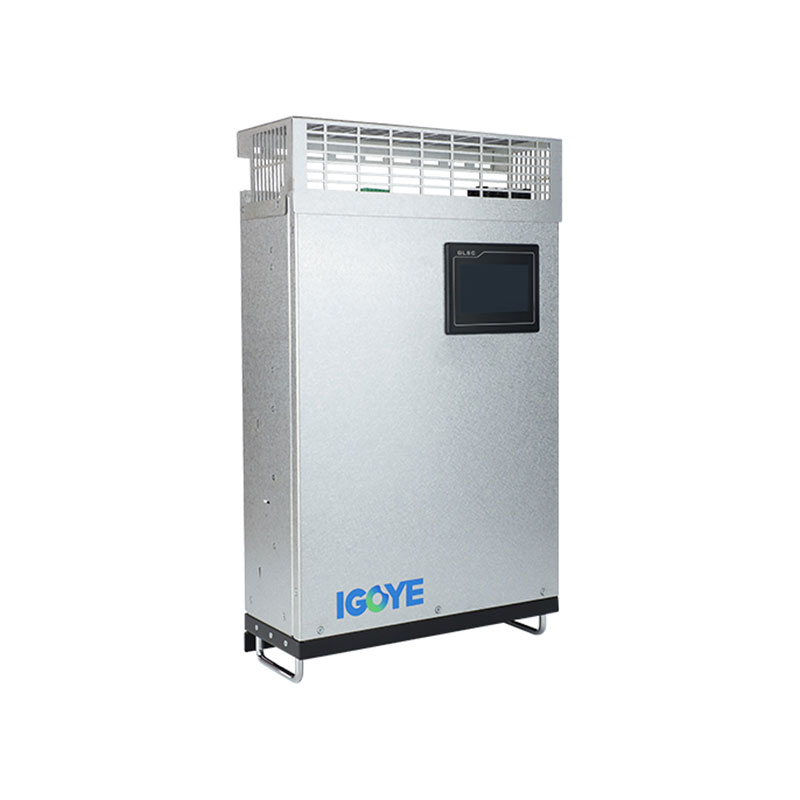
What pain points pushed me toward dynamic compensation?
- Variable loads from welders, compressors, and drives causing voltage dips and nuisance trips
- Utility penalties and deratings when power factor slipped under site targets
- Hot spots and overheated neutrals from phase imbalance and current distortion
- Passive banks over- or under-correcting as production shifted across shifts
How does an Advanced Static Var Generator keep the bus stable under real conditions?
The controller samples each cycle, computes the exact reactive current, and drives an IGBT bridge to supply capacitive or inductive vars as the load swings. Because response lands within a cycle window, voltage recovers quickly and the current waveform cleans up. With the Advanced Static Var Generator in place, I see steadier voltage at machine terminals, near-unity power factor at the point of common coupling, and lower thermal stress on upstream equipment.
Where do the savings show up in the first year?
- Lower demand charges when reactive current stops inflating apparent power
- Reduced losses in cables and transformers thanks to tighter current and balance
- Fewer trips and process resets, which saves overtime and scrap
- Deferred oversizing of feeders and switchgear because the network behaves
These benefits come from control speed and precision, not brute force. That is why I prefer an Advanced Static Var Generator to step-based banks in plants with swing loads.
What sizing rules help me avoid overpaying?
- Map worst-case kvar demand by line, not just site total, and include imbalance
- Check short-term peaks during starts and weld pulses rather than only 15-minute averages
- Select cabinet ratings for ambient and altitude so the nameplate is usable in the field
- Leave a sensible margin for growth but keep modules scalable so I add capacity only when needed
When I specify the next Advanced Static Var Generator, I also set targets for power factor at the PCC, allowable voltage flicker, and THDi, so success is measurable.
How does this compare with other correction options?
| Option | What it does | Where it fits | Limitations |
|---|---|---|---|
| Advanced Static Var Generator | Real-time reactive compensation with fast response and phase balancing | Variable loads, EV fast charge hubs, drives, welders, mixed lines | Higher initial cost than fixed banks, needs proper harmonic coordination |
| Passive capacitor bank | Fixed kvar steps for steady power factor | Stable base loads with little fluctuation | Can over-correct at light load, slow to react, possible resonance |
| Thyristor-switched capacitors | Faster step switching than contactors | Moderately variable loads | Still step-based, limited precision under rapid swings |
| Active harmonic filter | Targets current distortion from nonlinear loads | Drives and rectifiers with high THDi | Does not correct power factor unless paired with vars |
| Hybrid AHF + SVG | Combines harmonic mitigation with dynamic vars | Sites needing both deep THDi reduction and PF correction | More complex coordination and commissioning |
Why does phase balancing matter more than I expected?
By actively shifting compensation per phase, the Advanced Static Var Generator narrows phase current spread and frees headroom on shared feeders. That translates to cooler gear and fewer nuisance trips on sensitive protection.
Will it coexist with solar, storage, and EV charging?
Yes. Fast-changing export and charge profiles benefit from dynamic kvar control. On feeders with PV inverters and DC fast chargers, the Advanced Static Var Generator smooths voltage during transients and keeps site power factor inside utility windows even as dispatch changes.
Which specifications do I check before I sign?
- Response time across the full kvar range under worst-case distortion
- Continuous duty kvar and overload profile at site ambient and altitude
- Harmonic immunity and coordination with any existing filters
- Communications and SCADA hooks for visibility and alarms
- Modularity so I can scale capacity without reworking the lineup
I also ask for witnessed factory tests and a commissioning plan that proves the Advanced Static Var Generator holds targets during my actual load steps.
How do I deploy without disrupting production?
- Log baseline power quality and penalties for at least one full production cycle
- Install in a lineup close to the most variable loads to shorten the control loop
- Commission during staged load ramps and store setpoints as recipes
- Review alarms and trending so the team trusts what the system is doing
With this workflow, the Advanced Static Var Generator becomes a quiet part of the network that just keeps things steady.
What results am I aiming for after ninety days?
- Power factor held near utility targets across shifts
- Measured reduction in voltage flicker events at sensitive nodes
- Lower transformer and cable temperatures during peak runs
- Documented cut in penalties and fewer protection trips
Ready to stabilize your facility today?
If you are tackling flicker, imbalance, or penalties and want a practical path forward, I am happy to share a sizing worksheet and a sample commissioning plan built around an Advanced Static Var Generator. Tell me about your feeder data and constraints, and we will map a right-sized path that fits your site. For quotes, specs, or a quick technical review, please contact us and include your single-line and load profiles so we can respond with specifics.