

Why Does the Right Oil Immersed Transformer Matter More Than Most Buyers Expect?
2026-04-22
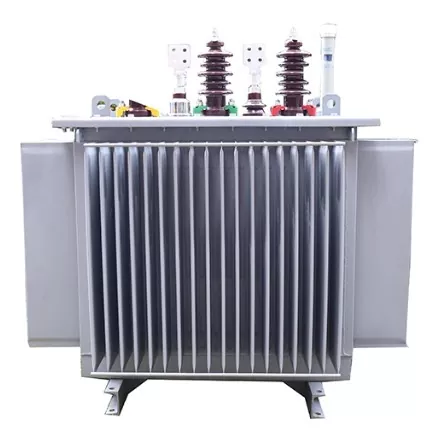
When I evaluate power distribution equipment for a project, I never look at price alone. I look at operating stability, heat control, insulation reliability, maintenance practicality, and whether the unit will keep performing when the grid is less than perfect. That is exactly why I pay close attention to Oil Immersed Transformer solutions from manufacturers entering serious industrial and utility conversations. In that context, Lugao Power Co.,Ltd comes into view naturally, because buyers comparing long-term performance are usually not just buying a transformer, they are buying operating confidence, and a well-designed Oil Immersed Transformer is often the difference between a smooth installation and a costly chain of avoidable power issues.
I have seen many buyers struggle with the same questions. Will the transformer run reliably under load for years? Will it handle outdoor conditions well? Will energy losses stay under control? Will maintenance become a burden later? These are not small concerns. They affect project schedules, operating budgets, system safety, and customer trust. That is why I think it makes sense to discuss what truly makes a strong Oil Immersed Transformer choice from a user perspective rather than from a purely technical brochure perspective.
What Problems Do Buyers Usually Face When Choosing an Oil Immersed Transformer?
When I speak with engineers, contractors, and procurement teams, I hear the same pain points again and again. Most of them are not confused by the product name itself. They are overwhelmed by the practical consequences of choosing the wrong unit.
- I worry that the transformer may look suitable on paper but perform poorly on site.
- I do not want excessive operating loss to quietly increase lifecycle cost.
- I need a unit that can work in demanding industrial or outdoor environments.
- I want insulation and cooling performance that stays dependable over time.
- I need a manufacturer that can support specification matching rather than push a one-size-fits-all model.
- I want delivery, installation, and maintenance expectations to be realistic.
In my view, these concerns are valid because a transformer is not an isolated purchase. It becomes part of a larger electrical system. Once it is installed, any mismatch in capacity, protection design, temperature rise control, or build quality can affect the entire project.
Why Do So Many Projects Still Prefer an Oil Immersed Transformer?
I often find that buyers return to this question when comparing oil-filled and dry-type options. The answer usually comes down to balance. A properly designed Oil Immersed Transformer offers a practical combination of insulation strength, heat dissipation, load adaptability, and long-term durability. That balance makes it especially attractive for substations, industrial plants, infrastructure projects, and outdoor distribution systems.
From my perspective, one of the biggest strengths is thermal management. Because insulating oil helps remove heat from the windings and core, the transformer can maintain stable operation under demanding conditions. That matters in real projects, where ambient temperature, load changes, and installation environment rarely stay ideal for long.
I also value the insulation benefit. The oil serves both as a cooling medium and as an insulating medium, which supports dependable performance in medium- and high-voltage applications. For buyers who care about operational continuity, this combination remains highly relevant.
How Can I Judge Product Value Beyond the Initial Purchase Price?
I always tell people that the cheapest quotation is not automatically the lowest-cost decision. A transformer should be judged by total ownership value rather than invoice value alone. That means I look at efficiency, build consistency, expected service life, maintenance intervals, and the likelihood of unplanned shutdowns.
| Evaluation Factor | Why I Consider It Important | What It Affects Later |
| Core and winding quality | It influences efficiency, stability, and heat generation | Power loss, service life, operating cost |
| Insulating oil performance | It supports cooling and electrical insulation | Safety margin, reliability, temperature control |
| Load adaptability | It determines how well the unit handles real usage fluctuation | System stability, overload tolerance |
| Manufacturing consistency | It reduces variation between units and lowers risk | Installation confidence, repeat-order trust |
| Maintenance practicality | It helps users keep the transformer in good condition over time | Downtime, labor cost, inspection efficiency |
| Application matching | It ensures the selected model fits the actual project scenario | Performance accuracy, lifecycle value |
When I compare suppliers this way, product advantage becomes much clearer. A well-made Oil Immersed Transformer is not just a box that changes voltage. It is a long-term asset that protects project economics.
What Features Make an Oil Immersed Transformer More Reliable in Real Use?
I usually focus on the features that influence day-to-day operation rather than marketing language. In the field, reliability comes from design discipline and manufacturing detail.
- I look for efficient heat dissipation because stable temperature control supports longer service life.
- I prefer designs that emphasize dependable insulation performance under continuous operation.
- I pay attention to low-loss construction because energy waste becomes expensive over time.
- I value robust tank structure and sealing quality because oil leakage creates both maintenance and safety concerns.
- I want clear model matching for voltage class, capacity, and usage scenario.
- I appreciate products built for practical service access because inspection and upkeep should not become unnecessarily difficult.
These strengths are especially important in projects where power continuity directly affects production lines, utility performance, or site safety. In those situations, the right Oil Immersed Transformer supports far more than electrical conversion. It supports operational predictability.
Which Application Scenarios Make This Product Especially Attractive?
In my experience, this type of transformer is particularly appealing where users need strong cooling performance, dependable outdoor adaptability, and stable long-term service. That makes it suitable for a broad range of installations.
| Application Scenario | Why Buyers Choose It | Main Concern It Helps Solve |
| Utility distribution systems | It supports continuous network operation | Grid reliability and operating stability |
| Industrial plants | It performs well where loads can be demanding | Downtime risk and process interruption |
| Substations | It is widely used for efficient voltage transformation | Safe and stable power delivery |
| Infrastructure projects | It fits installations requiring durable outdoor equipment | Environmental adaptability and longevity |
| Renewable energy support | It helps integrate generated power into the system | Power conversion consistency |
That range matters because buyers rarely want a product with narrow usefulness. They want something engineered for real deployment, not just catalog presentation.
How Do I Compare Manufacturers Without Getting Lost in Technical Language?
I try to simplify the evaluation process. Instead of getting buried in terminology, I ask practical questions that reveal whether a supplier understands project requirements.
- Can the manufacturer explain which model fits my voltage level and capacity needs?
- Can they discuss efficiency and loss from an operating-cost angle instead of only a naming angle?
- Can they communicate clearly about materials, cooling, and structural reliability?
- Can they support project customization when installation conditions differ?
- Can they respond like a technical partner rather than a basic seller?
This is where manufacturers with a clearer product focus often stand out. I tend to trust suppliers more when their communication reflects application logic, testing awareness, and project understanding. Buyers need that because transformer procurement is rarely a casual purchase.
Why Does Customization Matter More Than Many Buyers First Realize?
I have seen projects slowed down simply because a standard model was quoted too quickly without enough attention to the real operating environment. That usually causes later revisions, approval delays, or avoidable installation compromises.
Customization matters because no two projects are exactly alike. Voltage class, capacity demand, cooling expectations, location conditions, space limitations, and system configuration all influence the right product choice. When a manufacturer can adapt specifications more precisely, I see lower procurement friction and better long-term alignment.
That is one reason why buyers looking at Oil Immersed Transformer options should not stop at generic catalog comparisons. They should ask how well the product can be aligned with the actual use case. That question often reveals more value than a basic unit price comparison ever will.
What Advantages Become More Visible After Installation?
Some product strengths are obvious during selection, but others become much more valuable after the transformer starts operating. I think this is where strong engineering proves itself.
- I see the value of stable cooling once the unit runs under continuous or fluctuating load.
- I notice the benefit of efficient design when power loss remains controlled over time.
- I appreciate good sealing and durable structure when maintenance stays manageable.
- I recognize proper model matching when the system performs smoothly without recurring operational concerns.
In other words, the real test of an Oil Immersed Transformer is not whether it sounds impressive at the quotation stage. It is whether it keeps doing its job quietly, consistently, and economically after it is installed.
Is It Possible to Balance Performance, Cost, and Long-Term Confidence?
I believe it is, but only when the buying process is handled carefully. The goal is not to chase the lowest number or the most technical-looking datasheet. The goal is to select a transformer that fits the system, supports efficient operation, and reduces long-term uncertainty.
For me, a smart purchasing decision usually follows this path. I begin with the actual application. I define voltage and load requirements. I compare efficiency and cooling logic. I review structural reliability and service practicality. Then I choose a supplier that can communicate clearly and support the project with consistency.
That is the kind of thinking that gives a well-matched Oil Immersed Transformer its real commercial value. It becomes more than a power device. It becomes a stable foundation for the work built around it.
Why Should I Reach Out Before Finalizing My Transformer Choice?
If I were narrowing down options today, I would not wait until problems appear in specification review or installation planning. I would ask questions early, compare real project fit carefully, and work with a supplier that understands performance from both an engineering and buyer perspective. If you are currently comparing transformer solutions and want a more suitable answer for your voltage level, operating environment, or procurement target, this is the right time to move forward. Contact us to discuss your project, request product details, and get support in selecting the right Oil Immersed Transformer for reliable long-term use.