

Why does an Advanced Static Var Generator change the way I fix power stability?
2025-11-24
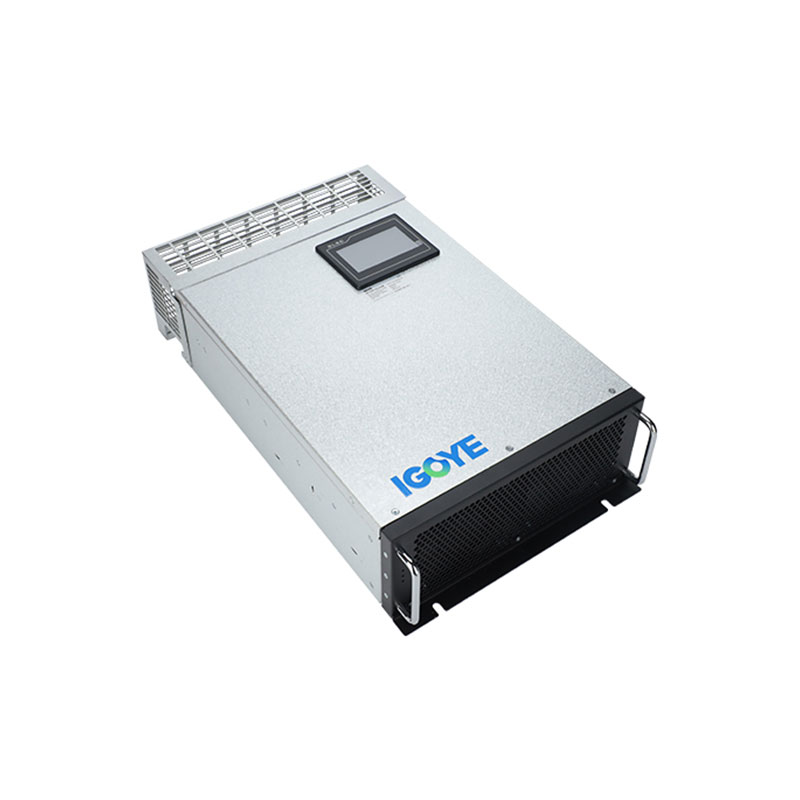
When I audit plants with voltage flicker and poor power factor, I start small—log a week of data, trace the worst feeders, then test a targeted fix. That approach led me to rely on an Advanced Static Var Generator for fast, surgical reactive power support. On one retrofit, I worked with the engineering team at GEYA’s to tune setpoints around peak shifts; the improvement was so immediate that operators asked whether we had upgraded the utility transformer. I did not push a brand for its own sake; I adopted a tool that let me solve messy, real-world instability with repeatable results—and that tool, quite often, is an Advanced Static Var Generator.
What problems do I actually see on shop floors and campuses?
- Voltage dips that upset drives and robots when large motors start or when welders pulse.
- Low power factor that triggers utility penalties and leaves transformers running hot.
- Capacitor banks that switch late, chatter, or fail under rapidly changing loads.
- Microgrids with PV and EV charging where reactive demand swings minute by minute.
- Process quality hits—blown batches, nuisance trips, and inconsistent weld quality.
In each case, an Advanced Static Var Generator gives me dynamic kVar injection or absorption within milliseconds, so the bus stays calm while production keeps pace.
How does an Advanced Static Var Generator stabilize my grid without overbuilding?
I explain it this way to production teams: the device continuously measures the bus and injects the exact reactive current the system needs at that instant. With closed-loop control, it tracks setpoints for voltage or power factor and responds fast enough that upstream equipment never notices the disturbance. Because it is bidirectional, the same unit fixes lagging loads during motor starts and leading conditions when lightly loaded capacitors would have caused overvoltage. That is why I call an Advanced Static Var Generator a “quiet bodyguard”—it acts before problems escalate.
Where does it outperform traditional capacitor banks in daily use?
- Speed I can count on: dynamic response during spot welds or crane lifts rather than step-based switching.
- Accuracy that sticks: continuous control holds power factor near the target across the day’s shifts.
- Longevity under stress: no switching contactors to wear, fewer thermal cycles, calmer transformers.
- Safety and compliance: smoother waveforms reduce nuisance trips and help me align with site harmonic limits.
- Space and scalability: modular frames let me right-size today and expand as production grows.
For sites with diverse, rapidly varying loads, an Advanced Static Var Generator simply matches the environment better than step-switched banks.
What sizing roadmap helps me move from estimate to purchase order?
- I log a typical high-load week and capture the 95th percentile of reactive demand by feeder.
- I identify the fastest events—welders, presses, cranes—and quantify their kVar swings and duration.
- I target a sitewide power factor (often 0.98) and allocate kVar where it tamps down the worst transients.
- I add margin for future shifts or a planned PV or EV charger expansion, then choose a modular frame size.
| Load scenario | Typical symptoms | Suggested kVar window | Expected outcome with Advanced Static Var Generator |
|---|---|---|---|
| Welding lines with motorized conveyors | Voltage flicker, robot resets | ±300 to ±600 | Stable bus during weld pulses, fewer PLC faults using an Advanced Static Var Generator |
| Crane bays and compressors | Start dips, demand spikes | ±500 to ±1,000 | Motor starts absorbed without visible sag, improved PF at demand peaks |
| Mixed EV charging and rooftop PV | Midday overvoltage, evening lagging PF | ±250 to ±500 | Day–night PF tracking and steadier voltage under inverter ramping |
| Food and beverage packaging lines | Nuisance trips on form-fill-seal cycles | ±150 to ±300 | Smoother cycle transitions and less scrap with fast VAR support |
Which specifications do I verify before I sign?
- Response time under step changes and flicker mitigation performance at the target bus.
- Continuous kVar range and overload headroom for short transients.
- Control modes I can use—PF hold, voltage hold, droop sharing, and feeder-level setpoints.
- Thermal design and protection—cooling method, ambient rating, and derating curves.
- Grid compatibility—nominal voltage ranges, enclosure rating, and communication protocols.
I also look at maintenance access and bypass options so the Advanced Static Var Generator can be serviced without halting production.
How do I integrate it cleanly with drives, PV inverters, and EV chargers?
I place the unit where the fastest disturbances originate and coordinate setpoints so control loops do not fight each other. Drives manage torque, inverters manage active power, and the Advanced Static Var Generator manages reactive current. With that division of labor, brownouts and nuisance trips fade from the logbook.
Why does total cost of ownership favor a dynamic solution now?
Once penalties for low PF and unplanned downtime are counted, the math becomes simple. A dynamic device trims utility charges, extends transformer life, and protects throughput. That is why my long-term budgets lean toward an Advanced Static Var Generator—it keeps the site inside targets without constant tuning and without replacing failed banks every few seasons.
Why do I trust Geya when projects must land on schedule?
Project risk lives in controls and commissioning. I value partners who show up with pre-tested control blocks, clear parameter maps, and straight answers during ramp-up. On that score, Geya has been reliable for me—firm delivery windows, responsive field support, and clean documentation that the maintenance crew can actually use alongside the Advanced Static Var Generator controller screens.
What should I do if I need a proposal and a practical path forward?
If the problems above look familiar, I can help you define scope in a single call: capture a short data set, size a modular frame, and outline an installation that avoids downtime. If you are ready to move or simply want a second opinion, contact us and ask for a quick PF and voltage stability review built around an Advanced Static Var Generator. Share your one-line diagram and recent utility bills, and we will return a right-sized plan you can put in front of your team today—just contact us and let’s start.