

Why Are Cylindrical Fuses Gaining Momentum in Industrial Circuit Protection?
2025-10-30
The cylindrical fuse is a compact yet critical component in modern electrical systems. In this article, the focus is on what a cylindrical fuse is, why it remains indispensable in protection circuits, and how its design, specifications and market trends are evolving. For industrial users, designers and maintenance managers, understanding the technical parameters, application advantages and future direction of cylindrical fuses is essential for ensuring system reliability and safety.
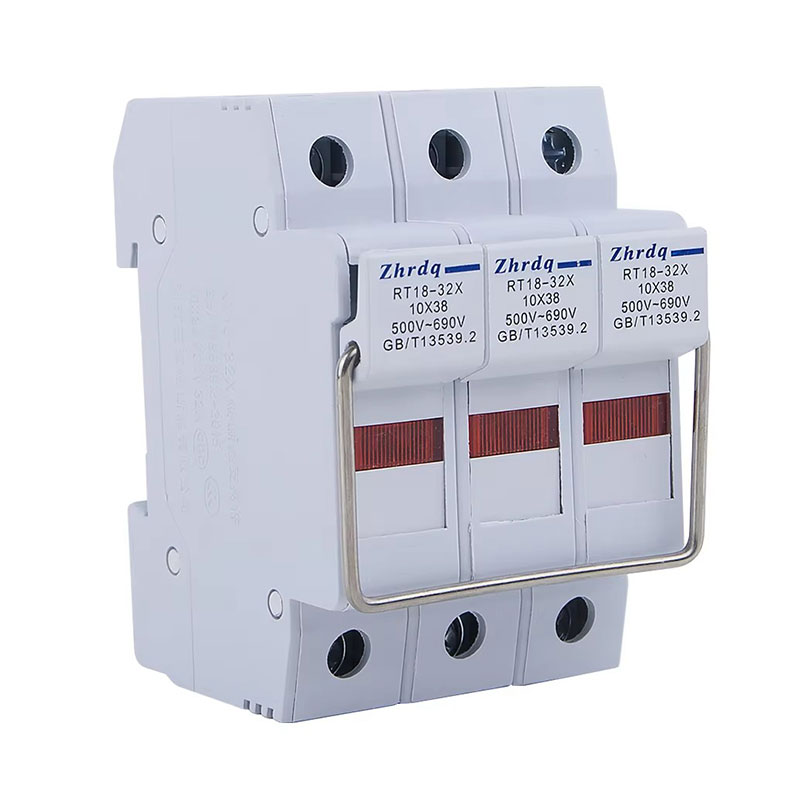
What is a Cylindrical Fuse?
A cylindrical fuse is essentially a fuse enclosed in a cylindrical body, typically with metal end-caps and an internal fusible element that melts under over-current conditions. When the current in a circuit exceeds the rated value, the element melts, thereby interrupting the circuit and preventing further damage to wiring or equipment.
Key Technical Parameters
Below is a table summarising the core specifications that buyers, engineers and procurement professionals should scrutinise:
| Parameter | Typical Value / Range (for industrial cylindrical fuse) |
|---|---|
| Body sizes | 10×38 mm, 14×51 mm, 22×58 mm (for low-voltage types) |
| Rated voltage | 400 V, 500 V, 690 V AC (low-voltage types) |
| Rated current | From ~0.25 A up to ~125 A for standard industrial sizes |
| Breaking capacity | High breaking capacities for fault currents; ceramic body types for higher voltages |
| Standard compliance | IEC 60269-1, IEC 60269-2 (and other regional standards) |
Understanding these parameters is crucial because selection of an undersized or unsuitable fuse can lead to nuisance blowing or insufficient protection; conversely, an oversized fuse may fail to blow during a fault, risking equipment damage or fire.
Typical Construction & Operation
-
The fusible element is made of copper, silver alloy or other material selected to have a predictable melting behaviour under over-current condition.
-
The body may be glass or ceramic; ceramic bodies offer higher arc-extinguishing capability, higher thermal strength, and better breaking capacity in high-fault environments.
-
End caps allow insertion into fuse holders or fuse blocks; compatibility with holders and ease of replacement are important.
Applications
Cylindrical fuses are widely used in industrial distribution boards, motor protection circuits, transformer protection, control panels and other equipment where over-current protection must be reliable and fast.
Why Use Cylindrical Fuses – Advantages and Functionality
Why are cylindrical fuses still relevant in modern systems?
-
High reliability: Because the fuse element melts quickly and reliably under fault conditions, cylindrical fuses provide robust protection.
-
Fast response time: Compared with some circuit breakers, fuses can react quicker to over-current, limiting the fault energy and protecting downstream equipment.
-
Cost-effectiveness: The simple construction, minimal maintenance and ease of replacement make them economical for many installations.
-
Compact footprint: The cylindrical design, particularly in standard sizes (10×38, 14×51, etc) allows for dense installation in cabinets and panels.
-
Clear selectivity and discrimination: With proper selection, fuses can be coordinated (in a multistage protection scheme) to isolate faults locally without affecting upstream systems.
How they function in protective systems
-
In a normal operating condition, the fusible element carries currents up to its rated value without melting.
-
When an overload or short-circuit occurs, the increased current causes heat (via I²R) which melts the element, breaking the circuit almost instantaneously.
-
The use of ceramic bodies or sand-filled fuse bodies helps to extinguish arcs when the element melts, contributing to safer operation under high fault currents.
-
For motor or transformer applications that have high inrush currents, special cylindrical fuses (e.g., “aM” type) are used to avoid nuisance blowing during startup while still protecting against actual short-circuit.
What advantages are particularly relevant for industrial users?
-
Ability to interrupt extremely high fault currents safely.
-
Simplified maintenance: replacement is straightforward and faults are visible (blown fuse), enabling clear, fast repair cycles.
-
Compatibility with modular fuse holders, remote indication (striker options) and other accessories to integrate into modern electrical control systems.
How to Select, Apply and Maintain Cylindrical Fuses – Practical Guidance
How to select correctly
-
Determine circuit parameters: Operating voltage, expected current (normal and fault), equipment inrush currents, available fault current – these all must feed into fuse selection.
-
Choose body size and rating: E.g., select appropriate size (10×38, 14×51, 22×58) based on panel space and mounting. Refer to manufacturer sizing tables.
-
Match the fuse type to application:
-
General protection (overload + short-circuit) → “gG” or equivalent.
-
Motor/transformer protection with high inrush → “aM” type or time-delay type.
-
-
Check breaking capacity: Ensure the fuse can interrupt the fault current in the installation safely without damage or risk of arc.
-
Verify standards and approvals: It is important that the fuse complies with the relevant standard (e.g., IEC, UL) for the region and application.
How to apply and install
-
Mount in an appropriate fuse holder or module that supports the cylindrical format and size; ensure correct orientation and adequate accessibility for replacement.
-
Ensure that the fuse is located as close as practical to the source of supply or at the start of the branch circuit to minimise unprotected conductor length.
-
Consider accessories such as remote indication (striker mechanism) especially in installations where fault indication needs to be rapid or remote.
-
Label the fuse holder clearly with fuse rating and replacement instructions to reduce risk of incorrect replacement.
How to maintain and replace
-
When a fuse blows, always isolate the circuit before replacing. Confirm and resolve the root fault (overload, short circuit, insulation failure) before inserting a new fuse.
-
Replace the blown fuse only with the identical type and rating (same current rating, voltage rating, size and breaking capacity) to maintain protection integrity.
-
Periodic inspection of fuse holders, contacts, and signs of heat stress or oxidation is advisable in critical installations.
-
Maintain a record of fuse replacements, fault events and circuit modifications to support coordination and future system audits.
Common practical pitfalls to avoid
-
Installing a fuse with too high a current rating (thus defeating protection).
-
Failing to consider inrush currents, leading to nuisance blowing.
-
Using a fuse with inadequate breaking capacity relative to available fault current.
-
Installing in inaccessible locations or without clear indication, causing delayed fault response.
Q&A – Common Questions
Q: How does a cylindrical fuse differ from other fuse types such as blade fuses or circuit breakers?
A: A cylindrical fuse is a simple, sacrificial device: once it blows it must be replaced. Its construction (fusible element in a cylindrical body) allows fast response to over-current and high fault energy interruption. In contrast, blade fuses (commonly used in automotive) have different mounting and ratings, and circuit breakers can be reset but may not respond as quickly to a fault.
Q: What causes a cylindrical fuse to blow unexpectedly, and how can this be prevented?
A: Unexpected blowing may result from overloads, short-circuits, inrush currents not accounted for, or incorrectly rated fuses (e.g., too low current rating or wrong type). Prevention involves proper sizing, understanding load characteristics (including motor starts), ensuring wiring is in good condition, and selecting the correct time-delay or high inrush type if necessary.
Future Trends and Market Outlook for Cylindrical Fuses
What trends are influencing cylindrical fuse usage?
-
Increasing demand in industrial protection systems: With electrification, automation and increased deployment of heavy-equipment and electric motors, the need for reliable circuit protection devices such as cylindrical fuses remains strong.
-
Higher fault-current environments: As power systems evolve (higher voltages, more distributed generation, renewable integration), devices must handle higher fault currents which drives demand for fuses with greater breaking capacity and robust ceramic bodies.
-
Compact design and modularity: Space in control panels is increasingly limited; manufacturers are offering compact cylindrical fuse formats, modular holders, remote monitoring (strikers with auxiliary contacts) and integrated systems to facilitate maintenance and diagnostics.
-
Standardisation and safety regulation: As electrical safety regulations evolve globally, there is greater emphasis on compliance (IEC, UL, etc), traceability, and quality of components. This creates opportunities for higher-specification cylindrical fuses.
-
Sustainability and lifecycle cost: Maintenance practices favour devices that are reliable, easy to replace and minimise downtime. Cylindrical fuses align with these trends by being low-maintenance yet offering high reliability.
Why this is important for procurement and design teams
Design and procurement professionals must anticipate not just the current load and protection requirements, but also future-proof their systems. Selection of a high-quality cylindrical fuse (with appropriate margins for fault current, inrush, and system growth) can avoid costly downtime or equipment damage as system conditions evolve. Furthermore, availability of replacement parts, clear cross-referencing and global standard compliance become important factors in long-term system planning.
How manufacturers, such as Zhenghao, are responding
Manufacturers are innovating in cylindrical fuse technology by offering enhanced versions: higher breaking capacities, integrated indicators and strikers for remote fault signalling, and better materials for thermal resilience. This ensures that users benefit from improved safety, easier maintenance and longer lifecycle performance.
In summary, the cylindrical fuse remains a foundational component of electrical protection systems—and given the evolving demands on power systems, its relevance is only growing. When specifying protection devices, attention to detail in terms of rated current, voltage, breaking capacity, size and installation environment is critical. The brand Zhenghao offers a range of cylindrical fuse solutions engineered for modern industrial applications; for further information and to discuss your specific protection requirements, contact us.