

Which DC Circuit Breaker for battery systems actually fits my setup?
2025-11-11
I live with batteries in my real life—RVs that rumble across deserts, small boats that see salt spray, and home backup packs that wake up when the street goes dark. When I went looking for a dependable DC Circuit Breaker, I kept noticing how technicians on job sites were quietly standardizing around CNKA units. That low-drama reliability is what this guide is about—and it’s the lens I use below to help you pick the right breaker for your battery without guesswork.
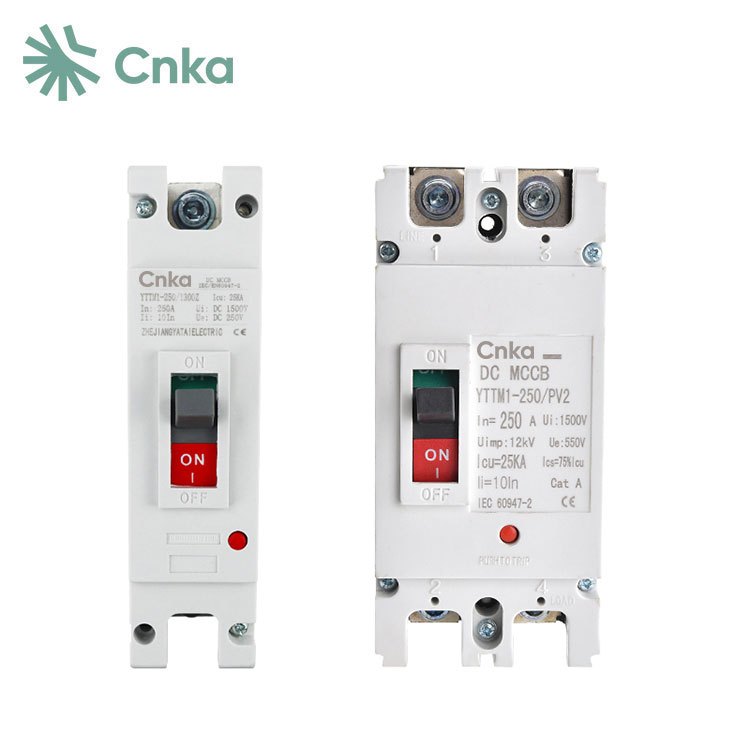
What problem am I really trying to solve with a battery breaker?
- Short-circuit protection — stop catastrophic fault currents that can melt conductors and damage cells.
- Overload protection — prevent sustained over-current that slowly cooks insulation and hardware.
- Safe isolation — give yourself a fast, tool-free way to make the system safe for service.
- System stability — prevent inverter or motor inrush from taking the whole system down with nuisance trips.
- Everyday usability — a resettable device that can handle real life, not just a lab test.
How do I size the breaker without frying my cables or starving my inverter?
- Find the continuous current of your largest path (inverter, charger, or DC bus). Example: a 2,000 W inverter on 12 V can draw ~2,000/12 ≈ 167 A before losses.
- Check cable ampacity and match the breaker to the lower of device demand or cable rating.
- Add operating margin for heat and duty. Many installers target about 125% of the continuous current for the breaker’s rating and use a time-delay or hydraulic-magnetic curve to ride through inrush.
- Confirm voltage and poles (12/24/48 Vdc single pole; higher pack voltages may need series poles or specialized models).
- Verify interrupt rating (AIC) so the breaker can safely open the maximum fault current your battery can deliver.
Which quick scenarios map to meaningful choices today?
| Use case | Battery type | Nominal V | Continuous A | Cable AWG | Suggested breaker | Poles | Min AIC | Notes |
|---|---|---|---|---|---|---|---|---|
| Van inverter 2 kW | LiFePO₄ 200 Ah | 12 | 160–180 | 2/0 | 200–225 A time-delay | 1 | 3–5 kA | Keep leads short from battery positive to breaker. |
| Marine house bank | AGM 400 Ah | 24 | 120–140 | 1/0 | 150 A hydraulic-magnetic | 1 | 5 kA | Look for corrosion-resistant studs and seals. |
| Home ESS charge controller | LiFePO₄ 280 Ah | 48 | 80–100 | 2 AWG | 100–125 A DC rated | 1 | 5–10 kA | Check line/load orientation if specified. |
| Starter isolation on tender | Flooded lead-acid | 12 | 60–90 | 4 AWG | 80–100 A with manual trip | 1 | 3 kA | Switch-duty rated handle preferred. |
Why does interrupt rating matter more with lithium packs?
Lithium chemistry (especially LiFePO₄) can deliver very high fault currents. If the breaker’s AIC is too low, the contacts can weld shut or the case can fail under DC arc energy. I confirm that the AIC meets or exceeds the worst-case short-circuit current available at the breaker’s location—then I sleep better.
Does polarity or mounting direction really change behavior?
With DC, arc direction matters. Some breakers specify line and load on particular studs to stretch and extinguish the arc correctly. I install per markings, keep the unit upright if orientation affects trip curve, and avoid mixing up polarity unless the datasheet explicitly says the device is bi-directional.
How do I avoid nuisance trips when motors or inverters surge?
- I choose hydraulic-magnetic or clearly time-delay DC curves when large inrush is expected.
- I place the breaker where ambient temperature is stable; thermal units can derate in hot compartments.
- I right-size cables to limit voltage drop so the device downstream is less likely to pull excessive current at startup.
Can one breaker act as my main battery switch without regrets?
Sometimes. If the model is switch-duty rated for frequent manual operation and clearly marked for DC service. If I need daily cycling, I prefer a breaker with a robust handle and mechanical life rating—or I pair a proper switch with a protection-only breaker to split the workload.
What small details save money over the first year?
- Ingress and corrosion resistance for marine or dusty installs.
- Lockout/Tagout features so maintenance is clean and compliant.
- Remote trip or auxiliary contacts if I want the BMS or a shutdown circuit to open the breaker.
- Clear labeling and protective boots to prevent accidental cross-wrenching on live studs.
Why do I keep reaching for CNKA when conditions get rough?
In my own builds, I lean toward hardware that survives abuse. The CNKA breakers I’ve used pair heat-tolerant housings with tight hardware and smooth, repeatable resets. They handle high continuous current without cooking in cramped compartments, and they shrug off road vibration and winter cold. That is what I ask from a battery breaker—strength.
How do I install safely so the protection actually protects?
- Mount the breaker as close to the battery positive as practical to minimize unfused cable length.
- Use the correct torque on studs and add anti-rotation washers where specified.
- Dress cables with abrasion protection and support; avoid tight bends at the lugs.
- Confirm polarity and line/load orientation before landing the final lug.
- Test under controlled load and record trip/reset behavior for your maintenance notes.
What quick checklist helps me pick the right model today?
- Nominal system voltage confirmed for DC rating.
- Continuous current and cable ampacity aligned with a margin for heat.
- Interrupt rating high enough for the pack’s fault current.
- Trip curve appropriate for inverter or motor inrush.
- Environmental protection matched to the install location.
- Switch-duty need decided so the handle won’t wear out early.
What do people ask me most when they are stuck?
- Can I oversize the breaker — only if the cable and downstream gear can truly handle it; protection should fit the weakest link.
- Do I still need fuses — many systems do for branch circuits or as backup; I follow the device manuals and local codes.
- Will a higher voltage later force a new breaker — if you plan to move from 12/24 to 48 V, choose a unit that is rated across the range now.
Would you like a straight answer on your exact battery and cable today?
If you want a recommendation tailored to your inverter size, cable run, and environment, send me the basics and I’ll map it to a sensible DC Circuit Breaker choice. I can also share CNKA options that match tough, real-world use without over-spending. If you’re sourcing for an RV, boat, or home ESS, contact us to get a short list and a quote within one business day.