

What Makes the Hersman Pressure Transducer the Key to Accurate Industrial Measurement?
2025-11-11
In the evolving landscape of industrial automation and precision engineering, the Hersman Pressure Transducer has emerged as a vital instrument for accurate pressure monitoring and control. Designed to convert physical pressure into precise electrical signals, it serves as a cornerstone in sectors such as hydraulics, pneumatics, oil and gas, HVAC systems, and process control. Its stable performance and high sensitivity ensure consistent and reliable readings, minimizing system downtime and optimizing production efficiency.
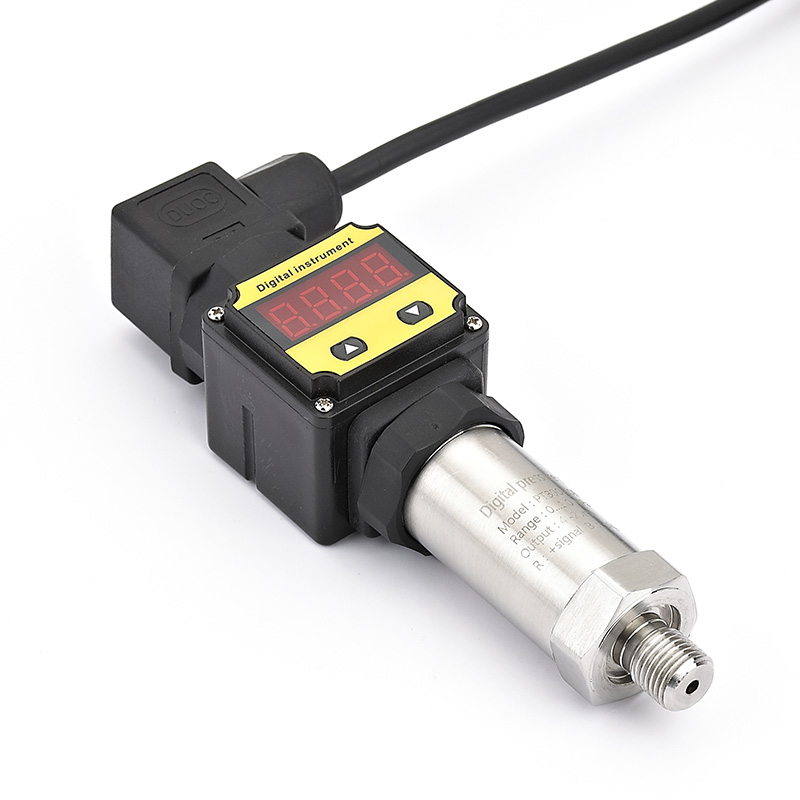
Pressure transducers are indispensable in maintaining process safety, controlling energy consumption, and improving overall equipment effectiveness. The Hersman Pressure Transducer offers not only superior measurement accuracy but also robust structural design, making it suitable for harsh and dynamic industrial environments. It stands out with its ability to handle both low and high-pressure applications while maintaining excellent repeatability and durability.
Why Does the Hersman Pressure Transducer Stand Out in Accuracy and Reliability?
The Hersman Pressure Transducer is designed with cutting-edge sensing technology that ensures precision under various environmental and operational conditions. Its high-quality materials, such as stainless steel diaphragms and hermetically sealed housings, allow it to operate in demanding industrial setups with exposure to dust, vibration, and moisture.
One of the primary reasons the Hersman model outperforms others is its excellent thermal stability. Temperature changes often cause measurement drift in conventional sensors, but Hersman’s advanced temperature compensation circuit minimizes such errors. This ensures that readings remain stable even when operating in extreme temperature ranges.
Key Advantages of the Hersman Pressure Transducer:
-
High Measurement Accuracy: Typically ±0.25% to ±0.5% FS (Full Scale) ensures dependable readings.
-
Wide Pressure Range: Capable of measuring from 0–10 kPa up to 100 MPa, suitable for multiple industrial applications.
-
Excellent Temperature Resistance: Operates efficiently within -40°C to +125°C, ensuring stability in various climates.
-
Rugged Construction: Stainless steel body and corrosion-resistant diaphragm provide durability in harsh environments.
-
Fast Response Time: Responds within milliseconds, ensuring real-time monitoring and control.
-
Low Power Consumption: Ideal for both portable devices and integrated systems.
-
Multiple Output Options: Includes 4–20 mA, 0–5 V, and digital RS485 outputs for flexible system integration.
Typical Technical Parameters of the Hersman Pressure Transducer
| Parameter | Specification |
|---|---|
| Pressure Range | 0–10 kPa to 100 MPa |
| Output Signal | 4–20 mA / 0–5 V / RS485 |
| Accuracy | ±0.25% FS / ±0.5% FS |
| Operating Temperature Range | -40°C to +125°C |
| Overpressure Limit | 150% FS |
| Material | Stainless Steel 316L |
| Power Supply | 9–36 V DC |
| Response Time | ≤5 ms |
| Electrical Connection | M12 connector / cable |
| Protection Grade | IP65 / IP67 (optional) |
Such specifications highlight the balance between engineering precision and mechanical resilience. Whether used in oil pressure monitoring, water treatment systems, or gas pipelines, the Hersman Pressure Transducer provides stable, accurate, and long-term performance with minimal maintenance.
How Does the Hersman Pressure Transducer Work and What Applications Does It Serve?
The working principle of the Hersman Pressure Transducer is based on strain gauge technology. When pressure is applied to the sensing diaphragm, it causes a small deformation. This deformation alters the electrical resistance of the strain gauges, which is then converted into an electrical signal proportional to the applied pressure. The output signal is processed through a precision amplifier and conditioning circuit to ensure linearity and stability.
This mechanism provides a highly reliable and repeatable signal output, essential for maintaining the accuracy of automation systems. Its compact design allows for easy installation in limited spaces, and its electrical compatibility ensures seamless integration into control systems, PLCs, and digital displays.
Main Industrial Applications Include:
-
Hydraulic and Pneumatic Systems: For real-time pressure monitoring and control.
-
HVAC and Refrigeration Systems: Ensures optimal operation and energy efficiency.
-
Oil and Gas Pipelines: Monitors pipeline pressure to prevent leaks and maintain safety.
-
Water Treatment Plants: Controls flow and pressure in filtration and pumping systems.
-
Automotive Industry: Used in fuel, brake, and engine systems for pressure regulation.
-
Medical Equipment: Provides accurate monitoring in sterilization and fluid control systems.
-
Aerospace and Defense: Ensures high reliability in flight control and environmental monitoring systems.
The versatility of the Hersman Pressure Transducer stems from its customizable output ranges, pressure interfaces, and signal options, enabling adaptation across multiple industries. Its design supports both gauge pressure and absolute pressure measurements, providing flexibility to meet different application needs.
What Are the Future Trends in Pressure Transducer Technology and How Will Hersman Lead the Way?
As industries continue to embrace smart manufacturing and digital transformation, the role of pressure transducers is shifting from simple measurement devices to intelligent monitoring systems. The Hersman Pressure Transducer is already evolving toward smarter integration, featuring IoT-compatible interfaces and remote calibration capabilities.
Future developments are expected to focus on the following areas:
-
Digital Connectivity: Integration with IoT systems for real-time data transmission and remote monitoring.
-
Enhanced Miniaturization: Compact transducers for portable and space-limited applications.
-
Self-Diagnostic Functions: Built-in algorithms to detect drift, overload, and sensor aging.
-
Energy Efficiency: Low-power models for battery-operated and wireless applications.
-
Environmental Sustainability: Use of eco-friendly materials and manufacturing processes.
With global industries increasingly depending on automation and smart sensing, pressure transducers like Hersman will play an even more critical role in ensuring system stability and operational efficiency. The shift from analog to digital transducers also reflects the need for faster communication protocols and predictive maintenance capabilities—a domain where Hersman is actively innovating.
Common Questions About the Hersman Pressure Transducer
Q1: What is the difference between a pressure sensor and a pressure transducer?
A pressure sensor is a general term referring to a device that measures pressure and converts it into an electrical signal. A pressure transducer, like the Hersman model, goes a step further by providing a conditioned and calibrated output signal (e.g., 4–20 mA or 0–5 V) that can be directly integrated into control systems. It ensures greater precision and stability for industrial use.
Q2: How should a Hersman Pressure Transducer be maintained for long-term accuracy?
Regular inspection and calibration are recommended every 6–12 months, depending on the application. The transducer should be kept clean, free from oil and debris, and protected from overpressure or mechanical shock. Proper grounding and shielding during installation prevent electrical noise from affecting signal accuracy. When used within its specified range, the Hersman Pressure Transducer typically offers a lifespan of over 10 million pressure cycles.
Why Hersman Pressure Transducer Represents the Future of Industrial Measurement
Precision, reliability, and adaptability define the Hersman Pressure Transducer. It combines advanced sensing technology with rugged design, ensuring optimal performance across various industries—from manufacturing to energy management. With the growing demand for smart sensing solutions, Hersman continues to set benchmarks in quality and innovation.
Supported by Zhejiang Huaxi Electronics Co., Ltd., a leader in industrial sensor development, the Hersman series demonstrates a strong commitment to excellence and technological advancement. The company continues to invest in research and development to ensure that every transducer meets the highest global standards for accuracy and durability.
For more information about the Hersman Pressure Transducer, its technical details, and customized solutions for specific applications, contact us today to learn how Zhejiang Huaxi Electronics Co., Ltd. can support your industrial measurement needs.