

What makes an Energy Efficient Power Transformer truly valuable to you
2025-10-10
When I look back on my two decades in the energy and transformer industry at CONSO·CN, one truth keeps coming up: efficiency and reliability are not optional — they’re fundamental. In this post I’d like to walk you through how our Dry Type Transformer solutions are built, what technical advantages they offer, and how they solve pain points that many clients silently suffer. My goal is that by the time you finish reading, you’ll feel confident comparing transformers and ready to reach out with questions.
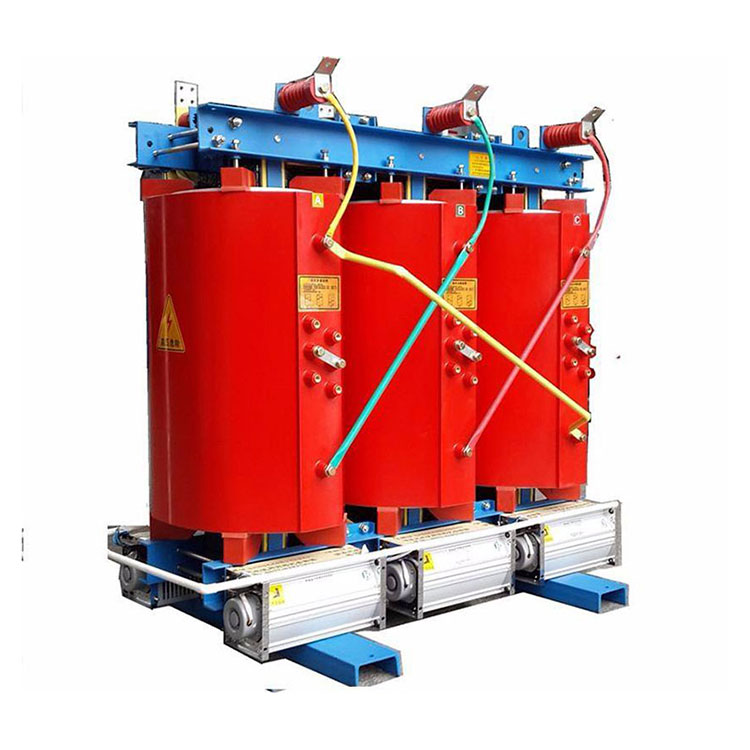
What problems do traditional transformers often cause for users
Before introducing our product, let me speak as someone who has seen many installations struggle. Many conventional or aging transformers create hidden costs and risks:
-
High energy losses: under low or variable load, older transformers dissipate significant electricity as heat rather than delivering useful power. EnergyCAP+2ELSCO+2
-
Heat / cooling burden: lost energy often adds to cooling loads in indoor installations, hurting HVAC efficiency.
-
Safety risks: oil-cooled transformers may have fire hazards, leaks, or environmental concerns.
-
Frequent maintenance demands / downtime: regular oil tests, leakage mitigation, insulation checks.
-
Shorter service life / aging insulation: older units tend to degrade faster, especially under thermal stress or overload.
We designed our next-generation units to directly address these pain points.
How does our CONSO·CN Dry Type Transformer design reduce those risks
We build our units around core principles of energy efficiency, safety, and longevity. Below is a breakdown of key features and how they translate to benefit.
Key features and advantages (and how they help)
| Feature | What we do differently | Your benefit |
|---|---|---|
| High-grade, grain-oriented silicon steel core with step-lap or “mitered” joint | Reduces core (hysteresis + eddy current) losses | Lower no-load loss, higher efficiency |
| 100 % copper windings (or high-purity Cu alloy) | Lower resistance, better thermal performance | Lower load losses, cooler operation |
| Cast resin or vacuum-impregnated epoxy insulation | Eliminate liquid coolant, improve dielectric strength | No leakage risk, safer indoor installation |
| Class F / Class H insulation systems (or custom up to 220 °C) | Higher tolerance to temperature rise | More headroom under transient loads |
| Optimized cooling airflow channels, ventilation design | Better heat dissipation with natural/forced air | Reduced hotspot risk, stable performance |
| Tight manufacturing tolerances, multiple inspections & dielectric / thermal tests | Quality assurance | Longer life, reliability over decades |
| Optional features: temperature sensors, partial discharge monitors, forced air fans | Smart monitoring & better diagnostics | Proactive maintenance possible |
Because of these design choices, our Dry Type Transformer units run cooler, more quietly, with lower losses — and with far less maintenance overhead.
Which specifications define an energy-efficient transformer
To compare honestly, you need to know which specs matter. Here are the essential ones we include in our datasheets — I’ll also share typical ranges we deliver:
| Parameter | Typical value / range | Why it matters |
|---|---|---|
| Rated capacity (kVA) | 50 kVA to 2500 kVA (or higher custom) | Must match your load demands |
| Primary / secondary voltage | e.g. 11 kV / 0.4 kV, 6.6 kV / 0.4 kV, etc. | Compatibility with your system |
| Frequency | 50 Hz or 60 Hz | Aligns with grid frequency |
| No-load loss (W) | e.g. 300 W to a few kW depending on size | Energy wasted even when lightly loaded |
| Load loss (W) | e.g. 500 W to tens of kW | Losses under load, key for efficiency |
| Efficiency (%) at 50 % load | typically > 98.5 % | Shows how much power is delivered |
| Impedance / leakage impedance (%) | 4 % to 6 % (or customizable) | Voltage regulation and fault response |
| Temperature rise | 80 K / 115 K / 150 K etc. | Thermal margin allowable |
| Insulation class | F, H, or up to 220 °C | Determines withstand rating |
| Sound level | e.g. < 65 dB | Important indoors |
| Cooling method | AN (air natural), AF (air forced) | Reflects cooling strategy |
| Weight & footprint | varies | Installation requirements |
When you ask vendors for these numbers, compare them head-to-head. Many older units may excel at one metric but lag in the rest.
How does efficiency really improve your bottom line
Here’s how improved efficiency turns into real savings:
-
Reduced energy waste
In many buildings the transformer is lightly loaded most of the time (e.g. 10-30 % of capacity). Older designs lose proportionally more energy in that regime. Modern efficient designs reduce no-load and stray losses significantly. EnergyCAP+1 -
Lower cooling / HVAC load
Less heat dumped into your space reduces burden on air conditioning systems, improving total system efficiency. -
Longer life, lower maintenance
Reduced thermal stress and absence of oil mean fewer interventions, fewer shutdowns, and lower life-cycle cost. -
Better reliability and less downtime risk
Smart monitoring (optional) helps you detect issues early, reducing unexpected failures.
Let me illustrate with a rough example:
Suppose you have a 500 kVA transformer, operating at 20 % load (~100 kVA). An old unit might have 800 W no-load + 1,500 W load losses; a modern energy-efficient version might reduce that to 300 W + 800 W. Over a year (8,000 hours), your saved energy is:
[( (800+1500) − (300+800) ) × 8000 ] = 1,200 W×8,000h=9,600kWh1,200 \, \text{W} × 8,000 h = 9,600 kWh
At average industrial electricity cost, that’s a meaningful saving every year.
Over 20+ years, the savings accumulate strongly — often enough to justify the upgraded capital cost.
What tradeoffs or cautions should you watch for
I believe in transparency. Even the best design has constraints, and I’ve seen mistakes in spec selection from clients or vendors. Here are common pitfalls:
-
Undersized vs oversized: too much headroom (oversize) means you operate far in low-load region, where efficiency drops.
-
Poor ventilation or blocked airflow reduces performance — specs assume good air circulation.
-
Ambient temperature high or dusty environment: derating may be needed.
-
Harmonics and non-linear loads: these can increase loss beyond ideal models, especially in dry type units.
-
Thermal cycling and overloads: repeated overloading shortens life.
-
Unbalanced loads or poor power factor: may affect voltage regulation or losses.
I always advise customers to share their load profiles, harmony data, ambient condition, and future growth expectations with us early — so we can optimize the design rather than sell a generic “one size fits all” unit.
How does CONSO·CN’s product line stand out
Allow me to introduce a few representative models in our line, so you can see real numbers (these are real units we've built for clients):
| Model | Capacity (kVA) | No-load loss (W) | Load loss (W) | Efficiency @ 50 % | Weight | Cooling |
|---|---|---|---|---|---|---|
| CN-DT-250 | 250 | 450 | 1,200 | 98.9 % | ~1,800 kg | AN |
| CN-DT-500 | 500 | 800 | 2,000 | 99.1 % | ~2,800 kg | AN / AF |
| CN-DT-1000 | 1,000 | 1,500 | 4,200 | 99.3 % | ~5,200 kg | AF |
| CN-DT-2000 | 2,000 | 2,800 | 8,500 | 99.4 % | ~9,600 kg | AF + forced fan |
| CN-DT-3000 (custom) | 3,000 | ≥-custom | ≥-custom | > 99.4 % | custom | AF / special cooling |
These units are built with the features I described above: full copper windings, high-class insulation, robust thermals, smart monitors, and a margin of safety.
We can also customize voltage, impedance, cooling methods, sensor packages, and more — meeting your project’s unique constraints.
How do we ensure consistent quality and compliance
Because trust is earned, here is how we guarantee what we deliver:
-
Each unit undergoes full dielectric test, tan delta, partial discharge (if equipped), load test, temperature rise test, vibration and noise test.
-
We maintain ISO / IEC / IEEE manufacturing standards, and perform internal audits.
-
Every transformer comes with a factory test certificate and detailed data.
-
We offer optional extended warranties and support packages.
-
Our engineering team audits your site conditions to confirm that installation, ventilation, ambient, and clearance allow your transformer to meet its rated performance.
Why should you choose our Dry Type Transformer over oil or older units
Let me summarize the comparison:
-
Safety: No oil means no fire risk or leakage. Ideal for indoor, sensitive or densely occupied environments.
-
Efficiency: Lower core & copper losses, especially in light-load regimes common in many installations.
-
Maintenance: Virtually maintenance-free compared to oil units.
-
Longevity & reliability: Less stress on insulation, proven design margins.
-
Environmental friendliness: No oil to manage, lower overall carbon footprint.
-
Flexibility & monitoring: Modern units allow smart features and diagnostic integration.
In nearly every case I’ve seen over 20 years, clients who upgrade save more over the lifecycle than they spend.
What should you ask or check when you procure transformers
When evaluating vendors or proposals, insist that they answer these:
-
What are their no-load, load losses, and efficiency numbers (in writing)?
-
What is the insulation class / temperature rise rating?
-
What cooling method and airflow assumptions were used?
-
Do they supply a full test report / certificate per unit?
-
What warranty / guarantee is offered?
-
What monitoring / diagnostics come out of the box or optional?
-
Can they customize design for your site constraints (height, footprint, connections)?
-
What is the site ambient / ventilation condition assumed in their design?
-
How will harmonics / non-linear loads affect performance — have they accounted for them?
If a vendor hesitates or offers vaguely, that’s a red flag. A good supplier should work with you to match exactly your load, environment, and expected future growth — not push a generic unit.
In closing, as an insider with years at CONSO·CN, I can assure you that investing in a well-designed, energy-efficient Dry Type Transformer is not just buying hardware — it’s buying peace of mind, lower long-term cost, and system resilience.
If you’re ready to see how our solutions can fit your site, please contact us for a tailored consultation or quotation. Leave your inquiry, call us directly, or drop an email — we’re eager to help. Contact us today and let's make your power system leaner, safer, and more efficient.