

How to Choose the Right Indoor Vacuum Circuit Breaker for Reliable Power Distribution?
2026-06-03
Indoor Vacuum Circuit Breakers (VCBs) play a critical role in medium-voltage electrical distribution systems. They provide reliable protection against overloads, short circuits, and electrical faults while ensuring the safety of equipment and personnel. However, selecting the right Indoor Vacuum Circuit Breaker can be challenging due to the variety of voltage ratings, current capacities, installation environments, and operational requirements.
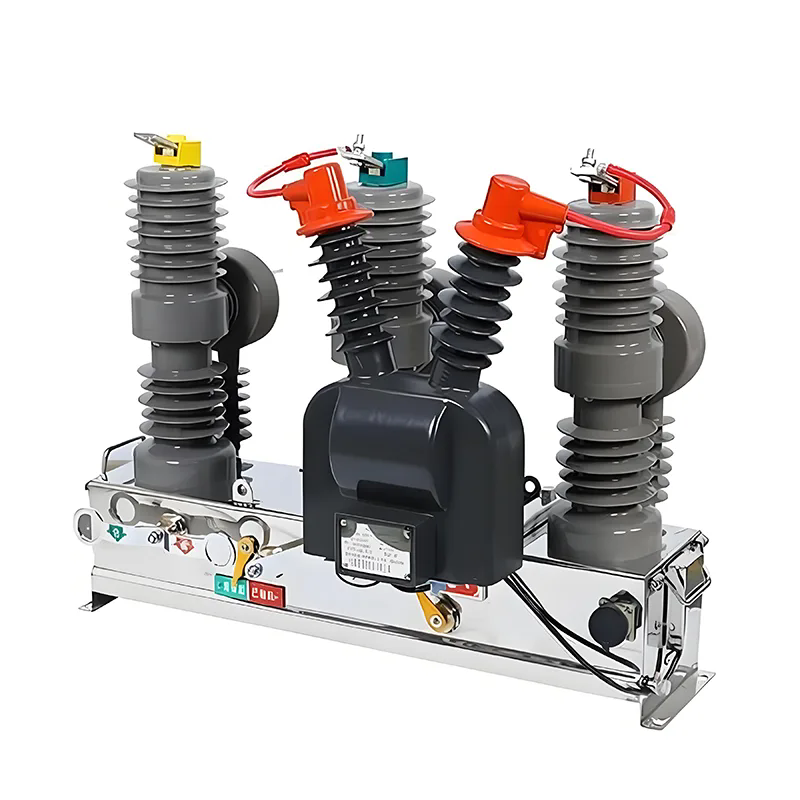
This comprehensive guide explains how Indoor Vacuum Circuit Breakers work, their advantages, key selection factors, common customer concerns, and best practices for installation and maintenance. Whether you are an electrical contractor, utility engineer, industrial facility manager, or project consultant, this article will help you make informed decisions and maximize system reliability.
Table of Contents
- What Is an Indoor Vacuum Circuit Breaker?
- How Does an Indoor Vacuum Circuit Breaker Work?
- Key Advantages of Indoor Vacuum Circuit Breakers
- Common Applications
- How to Choose the Right Indoor Vacuum Circuit Breaker
- VCB vs Other Circuit Breaker Technologies
- Installation Best Practices
- Maintenance and Troubleshooting
- Common Purchasing Mistakes to Avoid
- Future Trends in Vacuum Circuit Breaker Technology
- Frequently Asked Questions
- Conclusion
What Is an Indoor Vacuum Circuit Breaker?
An Indoor Vacuum Circuit Breaker is a medium-voltage switching device designed to interrupt electrical currents under normal operating conditions and fault conditions. The interruption process takes place inside a vacuum interrupter, where electrical arcs are extinguished quickly and efficiently.
Unlike traditional oil circuit breakers or air circuit breakers, vacuum technology eliminates the need for insulating oil or gas inside the interruption chamber. This results in a cleaner, safer, and more environmentally responsible solution for electrical power systems.
Indoor Vacuum Circuit Breakers are commonly installed in switchgear systems operating between 3.6kV and 40.5kV, providing dependable protection for power distribution networks.
How Does an Indoor Vacuum Circuit Breaker Work?
The operating principle of an Indoor Vacuum Circuit Breaker is based on vacuum arc extinction technology.
- When the breaker is closed, electrical current flows through the contacts.
- When a fault occurs, the protection relay sends a trip signal.
- The movable contact separates from the fixed contact.
- An arc forms briefly between the contacts.
- The vacuum environment rapidly extinguishes the arc.
- Current interruption is completed safely.
Because there are very few gas molecules inside the vacuum chamber, the arc cannot sustain itself for long. This allows extremely fast interruption with minimal contact wear.
Key Advantages of Indoor Vacuum Circuit Breakers
Many industrial and utility operators choose Indoor Vacuum Circuit Breakers because they provide superior performance and long-term value.
| Advantage | Benefit |
|---|---|
| High Reliability | Consistent performance during switching operations |
| Long Service Life | Vacuum interrupters require fewer replacements |
| Low Maintenance | Reduced operational costs |
| Fast Arc Extinction | Enhanced protection against faults |
| Compact Design | Efficient use of switchgear space |
| Safety | No risk of oil leakage or gas contamination |
| Environmental Friendliness | No insulating oil required |
These advantages make vacuum circuit breakers one of the most widely adopted technologies in medium-voltage applications worldwide.
Common Applications
Indoor Vacuum Circuit Breakers are used across numerous industries and infrastructure projects.
- Power generation facilities
- Utility substations
- Industrial manufacturing plants
- Mining operations
- Petrochemical facilities
- Commercial buildings
- Data centers
- Transportation infrastructure
- Renewable energy projects
- Hospitals and critical facilities
Their ability to provide reliable fault protection makes them essential wherever uninterrupted power supply is required.
How to Choose the Right Indoor Vacuum Circuit Breaker
Selecting the correct Indoor Vacuum Circuit Breaker requires careful evaluation of several technical factors.
1. Determine System Voltage
The rated voltage of the breaker must match the operating voltage of the electrical system. Common voltage classes include:
- 3.6kV
- 7.2kV
- 12kV
- 24kV
- 36kV
- 40.5kV
Choosing an incorrect voltage rating may compromise system protection and equipment lifespan.
2. Evaluate Rated Current
The breaker must handle the maximum continuous load current without overheating.
| Application Type | Typical Current Rating |
|---|---|
| Small Industrial Facilities | 630A |
| Medium Distribution Networks | 1250A |
| Large Industrial Plants | 2000A |
| Heavy-Duty Power Systems | 3150A and above |
3. Check Short-Circuit Breaking Capacity
One of the most critical parameters is the short-circuit interrupting capability.
Common ratings include:
- 20kA
- 25kA
- 31.5kA
- 40kA
The breaker should exceed the maximum fault current expected in the system.
4. Consider Installation Conditions
Environmental conditions directly affect equipment performance.
- Ambient temperature
- Humidity level
- Altitude
- Dust concentration
- Seismic requirements
Special configurations may be required for challenging environments.
5. Verify Compliance Standards
Ensure the product complies with internationally recognized standards such as:
- IEC 62271 Series
- ANSI Standards
- GB/T Standards
Compliance ensures product quality, safety, and interoperability.
VCB vs Other Circuit Breaker Technologies
| Feature | Vacuum Circuit Breaker | Oil Circuit Breaker | SF6 Circuit Breaker |
|---|---|---|---|
| Maintenance | Low | High | Medium |
| Environmental Impact | Low | Oil Disposal Required | Gas Management Needed |
| Arc Extinction | Excellent | Good | Excellent |
| Service Life | Long | Moderate | Long |
| Operational Reliability | Very High | Moderate | High |
For most medium-voltage indoor applications, vacuum technology offers an optimal balance of reliability, safety, and lifecycle cost.
Installation Best Practices
- Inspect equipment before installation.
- Verify mechanical operation and contact alignment.
- Follow manufacturer torque specifications.
- Ensure proper grounding.
- Perform insulation resistance testing.
- Conduct commissioning tests before energization.
- Train operators on emergency procedures.
Proper installation significantly reduces the likelihood of operational failures.
Maintenance and Troubleshooting
Although Indoor Vacuum Circuit Breakers require less maintenance than traditional technologies, periodic inspections remain essential.
| Maintenance Task | Recommended Frequency |
|---|---|
| Visual Inspection | Every 6 Months |
| Mechanical Operation Check | Annually |
| Contact Wear Inspection | Annually |
| Insulation Testing | Annually |
| Comprehensive Testing | Every 3–5 Years |
Common issues may include operating mechanism wear, loose electrical connections, auxiliary circuit faults, or improper installation practices.
Common Purchasing Mistakes to Avoid
- Selecting a breaker solely based on price.
- Ignoring future load expansion requirements.
- Underestimating fault current levels.
- Choosing incompatible switchgear configurations.
- Overlooking certification requirements.
- Failing to evaluate supplier technical support capabilities.
A thorough technical assessment before procurement can prevent costly downtime and equipment replacement.
Future Trends in Vacuum Circuit Breaker Technology
The medium-voltage industry continues to evolve toward smarter and more efficient power systems.
- Digital monitoring integration
- Predictive maintenance technologies
- Remote operation capabilities
- Enhanced vacuum interrupter materials
- Intelligent grid compatibility
- Improved operational diagnostics
These advancements help operators improve system reliability while reducing maintenance costs and unplanned outages.
Frequently Asked Questions
Q1: What is the typical lifespan of an Indoor Vacuum Circuit Breaker?
Most high-quality vacuum circuit breakers can operate reliably for 20 years or more when properly maintained.
Q2: Why is vacuum technology preferred over oil technology?
Vacuum interrupters eliminate oil-related risks, reduce maintenance requirements, and provide faster arc extinction.
Q3: Can Indoor Vacuum Circuit Breakers be used in renewable energy projects?
Yes. They are widely used in solar farms, wind power installations, and energy storage facilities.
Q4: How often should maintenance be performed?
Routine inspections are generally recommended every six to twelve months depending on operating conditions.
Q5: What factors most influence breaker selection?
Voltage rating, current rating, short-circuit capacity, environmental conditions, and compliance requirements are the primary considerations.
Conclusion
Choosing the right Indoor Vacuum Circuit Breaker is essential for ensuring electrical safety, operational continuity, and long-term system performance. By carefully evaluating voltage requirements, current ratings, fault levels, installation conditions, and compliance standards, organizations can significantly improve the reliability of their medium-voltage distribution systems.
As a professional power equipment manufacturer, Youbian provides dependable Indoor Vacuum Circuit Breaker solutions designed for modern power distribution applications. Our experienced engineering team can help you identify the most suitable configuration for your project requirements, improve system reliability, and reduce lifecycle costs. Contact us today to discuss your project and receive professional technical support tailored to your application.