

How Ring Main Units Support Reliable Power Supply in Solar Farms?
2026-04-20
Why Do Solar Farms Need Stronger Medium Voltage Distribution Systems?
Modern solar farms depend on stable medium voltage networks to move generated energy from inverter stations to substations and then to the utility grid. As project sizes increase, operators need switching equipment that can manage feeder continuity, reduce outage risk, and simplify maintenance planning. This is where the Ring Main Unit plays a central role in field operations.
Unlike basic radial layouts, ring network architecture allows alternative power paths when one section is isolated. That means generation losses can be reduced during cable faults or scheduled service work. Our engineering team often sees developers request compact units for pad mounted stations where land use efficiency is critical. Our factory supports these needs with practical designs for outdoor renewable projects.
Lugao Power Co.,Ltd. works with EPC contractors, utilities, and plant owners that require dependable distribution products for demanding environments. In solar applications, uptime is closely linked to revenue, so reliable switching assets are a long-term investment rather than a short-term purchase.
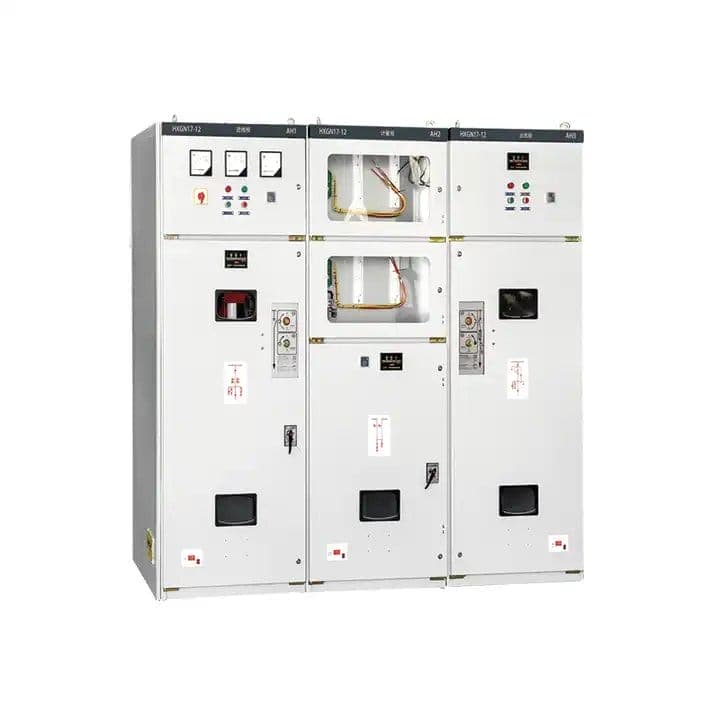
How Does Ring Main Unit Improve Reliability Across Solar Farm Networks?
The main advantage of a Ring Main Unit is sectionalized network control. If a cable fault occurs on one feeder, operators can isolate only the affected section while healthy feeders remain energized. This selective isolation helps maintain production from the remaining inverter blocks.
Another benefit is safe load switching. During inspections or expansion work, technicians need to open circuits under controlled conditions. Proper interlocks, earthing functions, and visible status indicators improve site safety and maintenance efficiency. Our service teams regularly recommend these features where remote solar fields have lean operating staff.
Weather resistance also matters. Dust, humidity, and temperature swings can shorten equipment life if enclosure quality is poor. Our factory focuses on sealed structures, corrosion-resistant surfaces, and stable insulation systems suited to utility-scale renewable sites. Lugao Power Co.,Ltd. supports buyers who need both indoor kiosk versions and outdoor compact assemblies.
| Main Parameter | Typical Specification |
| Rated Voltage | 12 kV to 24 kV |
| Rated Current | 630 A |
| Short Time Withstand Current | 20 kA to 25 kA for 3 s |
| Frequency | 50 Hz or 60 Hz |
| Protection Level | IP4X to IP54 depending on design |
| Switching Medium | Vacuum or gas insulated type |
Which Solar Farm Applications Benefit Most from This Equipment?
Projects using distributed inverter blocks, long collector cable routes, or multiple export feeders gain the most from ring topology. A Ring Main Unit is commonly installed near inverter transformer stations, internal collector nodes, and plant boundary connection points. It allows flexible routing during faults or maintenance windows.
Battery energy storage systems connected to solar plants also benefit from this switching method. As hybrid renewable sites become more common, operators need clean coordination between generation assets and storage assets. Our engineering group helps clients align feeder arrangements with expansion plans instead of replacing switchgear too early.
For regions with harsh summers or coastal exposure, enclosure treatment and gasket integrity are important procurement checks. Lugao Power Co.,Ltd. provides solutions that address operational durability and practical maintenance access.
| Solar Farm Area | Recommended Use |
| Inverter Block Zone | Feeder switching and isolation |
| Collector Network | Ring continuity and sectional control |
| Grid Interface Point | Protection and operational switching |
| Battery Storage Section | Flexible integration management |
| Expansion Area | Future feeder connection readiness |
What Should Buyers Review Before Selecting Solar Distribution Equipment?
Selection should begin with network voltage, fault level, cable configuration, and environmental conditions. A Ring Main Unit chosen only on price may create higher lifecycle cost if access space, spare parts, or protection compatibility are overlooked.
Our procurement advice is to confirm operating mechanism type, SCADA readiness, interlock logic, and maintenance interval expectations. Many utility clients also request test certificates and routine factory inspection records before shipment. Our factory can support custom panel combinations for project-specific single line diagrams.
Developers should also consider future capacity upgrades. If additional PV blocks may be added later, spare ways or modular extension options can reduce future civil work and shutdown risk.
How Can FAQ Answers Help Owners Improve Power Availability?
Why is a ring network better than a simple radial network in solar farms?
A ring network offers an alternate supply path. If one cable section fails, operators can isolate that segment and restore service through the opposite side, reducing production downtime compared with a single radial feeder.
How often should RMU equipment be inspected in renewable plants?
Inspection intervals depend on duty cycle, environment, and manufacturer guidance. Many owners perform visual checks regularly and schedule detailed electrical and mechanical inspections annually or during planned outages.
Can a Ring Main Unit support remote monitoring systems?
Yes. Many modern units can integrate auxiliary contacts, motorized operation, fault indicators, and communication interfaces for SCADA systems, allowing faster fault response and better operational visibility.
Why Does the Right Partner Matter for Long-Term Solar Project Success?
Reliable switching equipment supports generation continuity, worker safety, and lower maintenance disruption. Correct engineering, tested components, and responsive support all influence plant performance over many years. Lugao Power Co.,Ltd. supplies practical medium voltage solutions for renewable projects that value durability and service readiness.
If you are planning a new solar farm or upgrading an existing collector network, contact our team today. Our factory can review your single line diagram, recommend the right configuration, and prepare a dependable solution for your next project.