

Article Summary: This article explains the operating principles, structure, types, and real-world applications of current transformers (CTs). It focuses on helping engineers, technicians, and procurement specialists understand how CTs improve measurement accuracy, ensure electrical safety, and support reliable power system monitoring. It also highlights common selection mistakes, installation considerations, and troubleshooting practices to reduce operational risks and improve system efficiency.
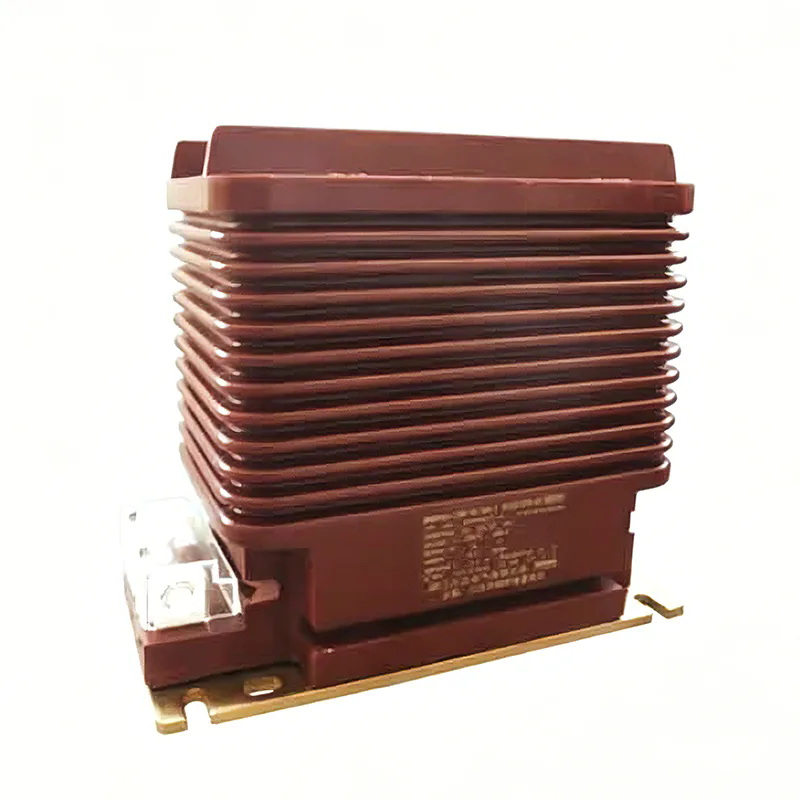
Table of Contents
Outline
This guide is structured to provide a complete understanding of current transformers from fundamental concepts to practical engineering applications. It starts with basic definitions, moves into working principles, then explores classification, selection criteria, installation guidelines, and finally troubleshooting practices used in industrial environments.
Introduction to Current Transformers
A current transformer (CT) is an essential instrument transformer used in electrical power systems to step down high current values to a standardized, measurable level. These devices are widely used in metering, protection, and monitoring systems.
Without CTs, it would be impossible or unsafe to directly connect measuring instruments to high-voltage transmission or distribution lines. They act as an interface between high-current power circuits and low-current control systems, ensuring both safety and accuracy.
In industrial and utility applications, CTs are considered critical components for energy management, fault detection, and system stability.
Working Principle
Current transformers operate on the principle of electromagnetic induction. The primary winding is connected in series with the power circuit, while the secondary winding is connected to measuring or protection devices.
When alternating current flows through the primary conductor, it generates a magnetic field in the CT core. This magnetic flux induces a proportional current in the secondary winding.
The relationship between primary and secondary current is defined by the turns ratio:
Primary Current / Secondary Current = Number of Secondary Turns / Number of Primary Turns
This transformation allows high currents (hundreds or thousands of amperes) to be safely measured as standardized low currents, typically 1A or 5A.
Types of Current Transformers
Current transformers are categorized based on construction, application, and installation method.
- Wound CT: Both primary and secondary windings are physically wound on the core. Used in low-current applications requiring high accuracy.
- Bar-type CT: Uses a straight conductor as the primary winding. Common in switchgear systems.
- Window CT: A conductor passes through a window in the core. Widely used in industrial monitoring.
- Split-core CT: Can be installed without disconnecting cables, ideal for retrofit applications.
- Protection CT: Designed for fault detection and protective relays.
- Metering CT: Designed for high accuracy in energy measurement systems.
Applications in Power Systems
Current transformers are used in a wide range of electrical environments, including utility networks, industrial plants, and commercial buildings.
- Energy metering and billing systems
- Overcurrent and short-circuit protection
- Substation monitoring systems
- Load analysis and power quality measurement
- Automation and SCADA systems
In modern smart grids, CTs play a vital role in ensuring real-time data accuracy and system stability.
How to Select the Right Current Transformer
Selecting a CT requires careful consideration of electrical parameters and application requirements. Incorrect selection can lead to inaccurate readings or system failures.
Key selection factors include:
- Rated Primary Current: Must match system load current.
- Burden: Total load connected to the CT secondary circuit.
- Accuracy Class: Determines measurement precision.
- Insulation Level: Must match system voltage requirements.
- Frequency: Typically 50Hz or 60Hz depending on region.
Improper burden selection is one of the most common causes of measurement errors in field installations.
Installation and Safety Considerations
Proper installation is critical for safe and reliable CT operation. A secondary circuit should never be left open when the primary is energized, as this can generate dangerously high voltages.
- Always short-circuit secondary terminals before disconnection
- Ensure correct polarity (P1/P2 and S1/S2 markings)
- Use proper grounding techniques
- Avoid mechanical stress on terminals
Following these safety practices significantly reduces the risk of equipment damage and personnel injury.
Common Issues and Troubleshooting
CT performance issues often stem from installation errors, aging insulation, or incorrect loading conditions.
- Incorrect readings: Usually caused by wrong polarity or ratio mismatch.
- Overheating: May result from excessive burden or short-circuit faults.
- Saturation: Occurs under high fault currents, affecting protection accuracy.
- Insulation failure: Caused by environmental stress or aging.
Routine inspection and calibration are recommended to maintain long-term reliability.
CT Specification Comparison Table
| Type | Accuracy | Application | Installation |
|---|---|---|---|
| Metering CT | High | Energy billing | Fixed |
| Protection CT | Moderate | Fault detection | Fixed |
| Split-core CT | Moderate | Retrofit systems | Clamp-on |
| Bar-type CT | High | Switchgear | Built-in |
FAQ
Q1: What is the main purpose of a current transformer?
A current transformer is used to step down high current levels into measurable and standardized values for protection and metering systems.
Q2: Can a CT operate without a load on the secondary side?
No. Operating a CT with an open secondary circuit can produce dangerously high voltages.
Q3: What is CT saturation?
CT saturation occurs when the magnetic core cannot handle high current levels, leading to distorted secondary output.
Q4: What is the difference between metering and protection CTs?
Metering CTs prioritize accuracy, while protection CTs prioritize performance under fault conditions.
Q5: How often should CTs be tested?
Periodic testing is recommended annually or based on system criticality and operational environment.
Conclusion
Current transformers are indispensable components in modern electrical systems, enabling safe measurement, effective protection, and reliable system monitoring. Understanding their working principles, selection criteria, and installation requirements is essential for maintaining system integrity.
For high-quality current transformer solutions and technical support, Youbian provides engineered products designed for demanding industrial environments. For customized requirements or detailed specifications, Youbian contact us to connect with our technical team and explore tailored solutions for your project needs.