

How Does an Indoor Vacuum Circuit Breaker Improve Power System Safety and Reliability?
2026-06-08
Modern electrical distribution systems demand reliable protection, stable operation, and minimal maintenance. Whether in industrial plants, commercial buildings, substations, renewable energy projects, or utility networks, electrical faults can lead to equipment damage, production downtime, and significant financial losses.
An Indoor Vacuum Circuit Breaker has become one of the most trusted solutions for medium-voltage power distribution systems because of its excellent arc-extinguishing performance, long service life, environmental friendliness, and operational reliability.
This article explains how an Indoor Vacuum Circuit Breaker works, why it is widely used, what challenges it solves, and how to choose the right model for your project.
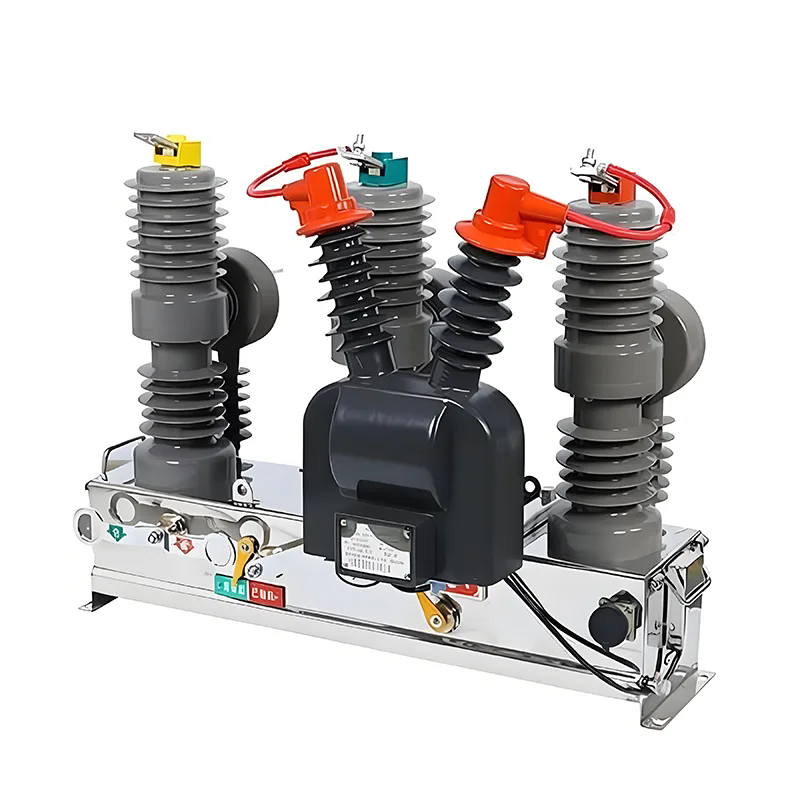
Article Summary
Indoor Vacuum Circuit Breakers are critical protective devices designed to interrupt fault currents and safeguard electrical systems. By using vacuum interrupter technology, they provide fast fault isolation, reduced maintenance requirements, enhanced safety, and longer operational life compared with traditional circuit breaker technologies. This guide explores working principles, applications, benefits, selection criteria, maintenance practices, and frequently asked questions to help buyers and engineers make informed decisions.
Table of Contents
- What Is an Indoor Vacuum Circuit Breaker?
- How Does an Indoor Vacuum Circuit Breaker Work?
- Why Is It Important for Modern Power Systems?
- Key Advantages of Indoor Vacuum Circuit Breakers
- Common Applications
- Comparison with Other Circuit Breakers
- How to Choose the Right Indoor Vacuum Circuit Breaker
- Maintenance Best Practices
- Frequently Asked Questions
- Conclusion
What Is an Indoor Vacuum Circuit Breaker?
An Indoor Vacuum Circuit Breaker (VCB) is a medium-voltage switching device designed to protect electrical systems by interrupting abnormal current conditions such as short circuits, overloads, and fault currents.
The breaker utilizes a vacuum interrupter chamber where electrical arcs are extinguished when contacts separate. Because there is virtually no ionizable medium inside the vacuum chamber, the arc is quickly eliminated, allowing the circuit to be interrupted safely and efficiently.
Indoor Vacuum Circuit Breakers are commonly installed in:
- Medium-voltage switchgear
- Power distribution substations
- Industrial facilities
- Commercial complexes
- Mining operations
- Renewable energy stations
- Data centers
- Infrastructure projects
Their compact design and dependable performance make them an essential component in modern electrical networks.
How Does an Indoor Vacuum Circuit Breaker Work?
The operating principle is based on interrupting electrical current within a vacuum environment.
- Under normal conditions, the contacts remain closed and current flows through the circuit.
- When a fault occurs, the protection relay sends a trip signal.
- The operating mechanism separates the contacts.
- An arc forms momentarily between the contacts.
- The vacuum environment prevents sustained ionization.
- The arc extinguishes rapidly at the current zero point.
- The system becomes isolated from the fault.
Because vacuum has extremely high dielectric strength, insulation recovery occurs very quickly, ensuring reliable interruption and reducing the risk of restrikes.
Why Is It Important for Modern Power Systems?
Electrical systems today are becoming increasingly complex. Industrial automation, renewable energy integration, and growing power demands require protection devices that can respond quickly and reliably.
Without effective fault interruption, businesses may face:
- Equipment destruction
- Production interruptions
- Safety hazards for personnel
- Fire risks
- Costly maintenance expenses
- Reduced power quality
An Indoor Vacuum Circuit Breaker addresses these challenges by providing rapid fault clearance and dependable system protection.
Key Advantages of Indoor Vacuum Circuit Breakers
1. Exceptional Arc Extinguishing Capability
Vacuum interrupters can extinguish arcs within milliseconds. This minimizes thermal stress on equipment and improves system protection.
2. Long Mechanical and Electrical Life
Vacuum interrupters experience minimal contact erosion compared with traditional technologies. Many units can perform tens of thousands of operations during their service life.
3. Low Maintenance Requirements
Because there is no insulating oil or gas replacement requirement, maintenance costs are significantly reduced.
4. Environmentally Friendly Operation
Vacuum technology avoids the use of oil and eliminates concerns related to gas leakage, making it a cleaner solution.
5. Compact Installation Design
Indoor Vacuum Circuit Breakers occupy less space, making them ideal for modern switchgear assemblies and indoor substations.
6. Enhanced Safety
Rapid fault isolation helps protect both equipment and operating personnel from hazardous electrical events.
Common Applications
| Industry | Application Purpose |
|---|---|
| Power Utilities | Distribution network protection |
| Manufacturing Plants | Motor and equipment protection |
| Mining Operations | Reliable power distribution |
| Commercial Buildings | Electrical safety management |
| Renewable Energy Projects | Solar and wind farm switching |
| Data Centers | Critical power continuity protection |
| Transportation Infrastructure | Railway and transit power systems |
As medium-voltage systems continue to expand globally, Indoor Vacuum Circuit Breakers remain a preferred protection technology across these sectors.
Comparison with Other Circuit Breaker Technologies
| Feature | Vacuum Circuit Breaker | Oil Circuit Breaker | SF6 Circuit Breaker |
|---|---|---|---|
| Arc Extinguishing Medium | Vacuum | Oil | SF6 Gas |
| Maintenance | Low | High | Moderate |
| Environmental Impact | Very Low | Oil Handling Required | Gas Management Required |
| Service Life | Long | Moderate | Long |
| Safety Performance | Excellent | Good | Excellent |
| Installation Size | Compact | Larger | Compact |
For many indoor medium-voltage applications, vacuum technology offers an optimal balance of performance, reliability, and lifecycle cost.
How to Choose the Right Indoor Vacuum Circuit Breaker
Selecting the proper breaker is critical for ensuring long-term reliability.
Consider the following factors:
- Rated voltage requirements
- Rated current capacity
- Short-circuit breaking capacity
- Mechanical endurance expectations
- Protection relay compatibility
- Switchgear integration requirements
- Operating mechanism type
- Environmental conditions
- Industry standards compliance
A detailed system analysis should be conducted before specifying a breaker for any project.
Key Questions to Ask Suppliers
- What is the rated interrupting capacity?
- How many operating cycles are supported?
- What certifications are available?
- Can the breaker integrate with existing switchgear?
- What technical support is provided?
- What spare parts are available?
Maintenance Best Practices
Although maintenance requirements are relatively low, regular inspections help maximize service life.
- Perform visual inspections regularly
- Check operating mechanisms
- Verify contact wear indicators
- Inspect electrical connections
- Conduct insulation resistance testing
- Verify relay coordination settings
- Follow manufacturer maintenance schedules
Preventive maintenance minimizes unexpected failures and ensures continuous system availability.
Frequently Asked Questions
Q1: What voltage range is suitable for Indoor Vacuum Circuit Breakers?
They are commonly used in medium-voltage systems ranging from approximately 3.6kV to 40.5kV depending on the design and application requirements.
Q2: Why is vacuum technology preferred?
Vacuum provides excellent dielectric recovery, fast arc extinction, low maintenance requirements, and long operational life.
Q3: Are Indoor Vacuum Circuit Breakers safe?
Yes. Their rapid fault-clearing capability significantly improves electrical system safety and equipment protection.
Q4: How long does a vacuum interrupter last?
Service life depends on operating conditions, but high-quality units can support many thousands of switching operations.
Q5: Can Indoor Vacuum Circuit Breakers be used in renewable energy projects?
Absolutely. They are widely used in solar power plants, wind farms, battery energy storage systems, and grid connection substations.
Conclusion
Indoor Vacuum Circuit Breakers have become a cornerstone of modern medium-voltage protection systems. Their ability to interrupt fault currents rapidly, reduce maintenance costs, improve operational safety, and deliver long-term reliability makes them an excellent investment for utilities, industrial facilities, commercial buildings, and renewable energy projects.
When selecting a protection solution for your electrical infrastructure, choosing a high-quality Indoor Vacuum Circuit Breaker can significantly enhance system performance while reducing lifecycle costs.
Youbian specializes in dependable medium-voltage power distribution equipment and advanced Indoor Vacuum Circuit Breaker solutions designed to meet demanding industrial and utility applications. If you are looking for expert guidance, customized solutions, competitive pricing, and professional technical support for your next project, contact us today and let Youbian help you build a safer, more reliable power system.