

How Does an AIS Substation Improve Power Distribution Reliability?
2026-06-04
Modern power systems require reliable, safe, and cost-effective substations to ensure stable electricity transmission and distribution. Among the various substation technologies available today, AIS Substations remain one of the most widely adopted solutions across utility networks, industrial facilities, renewable energy projects, and infrastructure developments.
An Air Insulated Substation (AIS) uses air as the primary insulation medium between energized conductors and grounded components. Due to its straightforward design, ease of maintenance, and competitive installation cost, AIS technology continues to be the preferred choice for many power transmission and distribution applications worldwide.
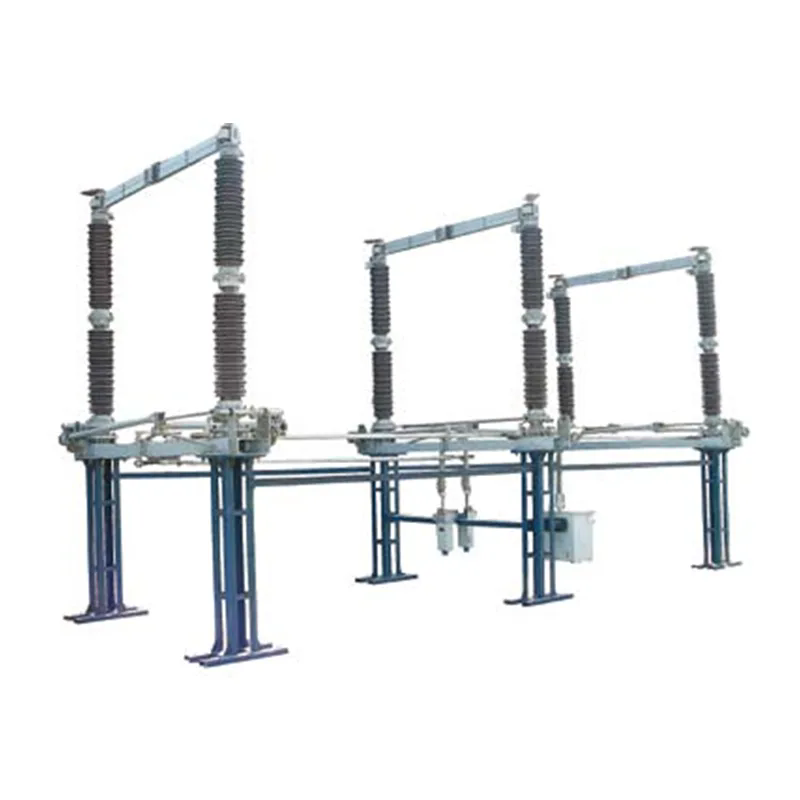
This article explores how AIS substations enhance power distribution reliability, their working principles, advantages, challenges, selection considerations, and why they remain an essential component of modern electrical networks.
Table of Contents
- What Is an AIS Substation?
- How Does an AIS Substation Work?
- Key Benefits of AIS Substations
- AIS vs GIS Substations
- Common Applications of AIS Substations
- How to Select the Right AIS Substation
- Maintenance Requirements
- Future Trends in AIS Technology
- Frequently Asked Questions
- Conclusion
What Is an AIS Substation?
An AIS (Air Insulated Substation) is an electrical substation where air serves as the insulation medium between live electrical equipment and grounded structures. The major components are installed in open-air environments and are separated by safe clearance distances to prevent electrical faults.
AIS substations are commonly used in voltage ranges from medium voltage to extra-high voltage transmission systems. Their simple architecture allows engineers and operators to easily inspect, maintain, and expand the installation when future capacity increases are required.
| Component | Function |
|---|---|
| Power Transformer | Voltage conversion between transmission and distribution levels |
| Circuit Breaker | Interrupts fault currents and protects equipment |
| Disconnect Switch | Provides visible isolation during maintenance |
| Current Transformer | Current measurement and protection functions |
| Voltage Transformer | Voltage monitoring and metering |
| Busbar System | Connects incoming and outgoing feeders |
| Protection & Control System | Monitors and controls substation operations |
How Does an AIS Substation Work?
The primary purpose of an AIS substation is to receive electrical power, transform voltage levels when necessary, and distribute electricity safely to downstream networks.
Electricity enters the substation through incoming transmission lines. The power then passes through protection devices, switching equipment, and transformers before being routed to outgoing feeders. Throughout the process, air provides insulation between energized conductors and grounded structures.
The protection system continuously monitors electrical parameters such as current, voltage, frequency, and fault conditions. If abnormal operating conditions occur, circuit breakers isolate the affected section within milliseconds, minimizing service interruptions and equipment damage.
This coordinated operation significantly enhances overall grid reliability and operational safety.
Key Benefits of AIS Substations
Many utilities and industrial users choose AIS substations because they provide an excellent balance between performance, cost, and maintainability.
- Lower initial investment compared to enclosed gas-insulated alternatives.
- Simple construction and easier equipment access.
- Convenient visual inspection and fault identification.
- Reduced maintenance complexity.
- Flexible future expansion capabilities.
- High reliability for outdoor applications.
- Proven technology with extensive global operating experience.
| Advantage | Customer Benefit |
|---|---|
| Open-Air Design | Easy access for inspection and repairs |
| Modular Configuration | Simplified expansion projects |
| Mature Technology | Reliable long-term performance |
| Lower Capital Cost | Reduced project investment |
| Wide Equipment Availability | Shorter procurement cycles |
AIS vs GIS Substations
One of the most common questions during project planning is whether to choose AIS or GIS technology.
| Factor | AIS Substation | GIS Substation |
|---|---|---|
| Insulation Medium | Air | Gas |
| Installation Cost | Lower | Higher |
| Land Requirement | Larger | Smaller |
| Maintenance Accessibility | Excellent | More Complex |
| Expansion Flexibility | High | Moderate |
| Application Environment | Open Areas | Space-Constrained Locations |
For projects with sufficient land availability and a strong focus on maintenance accessibility, AIS substations often provide the most economical solution.
Common Applications of AIS Substations
AIS substations support a wide range of industries and infrastructure sectors.
- Utility transmission networks
- Regional distribution systems
- Industrial manufacturing facilities
- Mining operations
- Oil and gas installations
- Renewable energy plants
- Railway electrification systems
- Commercial infrastructure projects
- Data centers and critical facilities
- Urban and rural grid expansion projects
Their adaptability makes them suitable for both developing and highly mature power networks.
How to Select the Right AIS Substation
Selecting the appropriate AIS substation requires careful evaluation of technical and operational requirements.
- Determine voltage level requirements.
- Calculate present and future load demand.
- Assess available installation space.
- Review environmental conditions.
- Evaluate fault current levels.
- Specify protection and automation requirements.
- Plan future network expansion.
- Consider lifecycle operating costs.
A properly engineered design can significantly improve long-term system reliability while minimizing maintenance expenses.
Maintenance Requirements
Although AIS substations are relatively simple to maintain, regular inspections remain essential for ensuring continuous operation.
- Visual inspection of insulators and conductors.
- Thermal imaging of electrical connections.
- Circuit breaker testing and calibration.
- Transformer condition monitoring.
- Protection relay verification.
- Grounding system inspections.
- Corrosion assessment of structural components.
Preventive maintenance strategies help utilities identify potential issues before they evolve into costly outages.
Future Trends in AIS Technology
Advances in digitalization and smart grid technologies continue to improve the performance of AIS substations.
- Digital protection and control systems.
- Remote monitoring platforms.
- Predictive maintenance analytics.
- Integrated condition monitoring sensors.
- Enhanced cybersecurity frameworks.
- Renewable energy integration capabilities.
- AI-assisted operational optimization.
These innovations enable operators to achieve greater visibility, efficiency, and reliability across modern power networks.
Frequently Asked Questions
Q1: What does AIS stand for in power systems?
AIS stands for Air Insulated Substation, where air acts as the primary insulation medium between energized components.
Q2: Is an AIS substation reliable?
Yes. AIS technology has been successfully deployed worldwide for decades and provides dependable performance when properly designed and maintained.
Q3: What are the main advantages of AIS substations?
Lower installation cost, easier maintenance access, flexible expansion options, and proven operational reliability.
Q4: When should AIS be preferred over GIS?
AIS is typically preferred when land is available and project budgets prioritize cost efficiency and ease of maintenance.
Q5: Can AIS substations support renewable energy projects?
Yes. AIS substations are widely used in solar farms, wind farms, and energy storage facilities for grid interconnection and power distribution.
Conclusion
AIS substations remain one of the most practical and reliable solutions for electrical transmission and distribution networks. Their cost-effectiveness, straightforward maintenance, operational flexibility, and proven engineering performance make them a preferred choice for utilities, industrial facilities, and infrastructure projects worldwide.
By selecting the right AIS configuration and implementing a proactive maintenance strategy, operators can significantly improve system reliability, reduce downtime, and support future power demand growth with confidence.
As a professional power equipment manufacturer and solution provider, Huixing Zhongdian (Beijing) Electric Co., Ltd. delivers high-quality AIS Substation solutions designed to meet diverse project requirements across utility, industrial, and renewable energy sectors.
Whether you are planning a new substation project or upgrading an existing power network, our experienced engineering team can help you identify the most efficient and reliable solution. Contact us today to discuss your project requirements and discover how Huixing Zhongdian (Beijing) Electric Co., Ltd. can support your long-term power infrastructure success.