Abstract
Compressed air systems are critical in industrial operations, yet moisture in compressed air can lead to corrosion, product contamination, and equipment damage. Adsorption air dryers provide a reliable solution by removing water vapor from compressed air streams, ensuring optimal performance and longevity of equipment. This article explores the principles, benefits, applications, and maintenance strategies of adsorption air dryers, addressing common challenges faced by industrial operators.
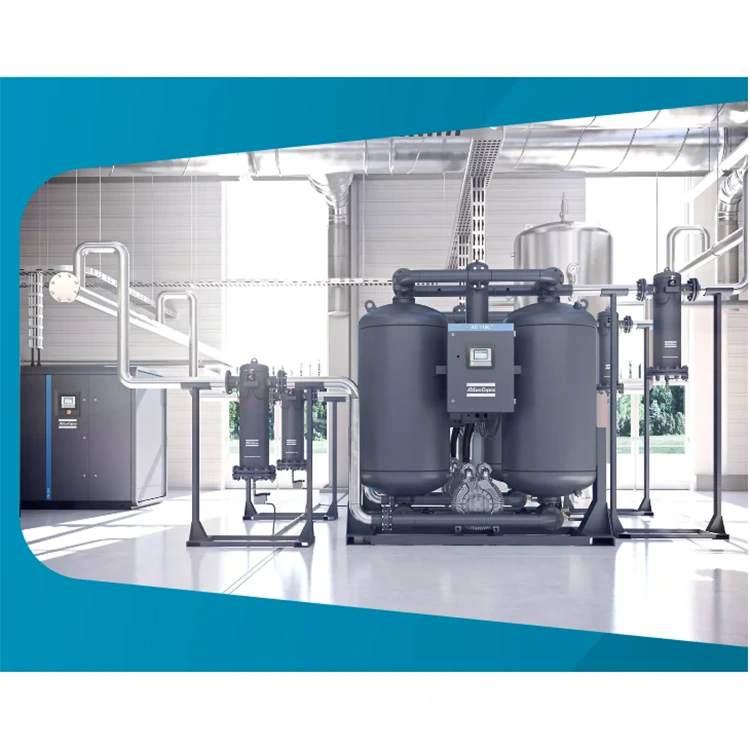
Overview of Adsorption Air Dryers
An adsorption air dryer is a device designed to remove moisture from compressed air using a desiccant material. Unlike refrigerated dryers, adsorption dryers can achieve extremely low dew points, making them ideal for sensitive processes in industries such as electronics, pharmaceuticals, food processing, and petrochemicals.
By preventing condensation in pipelines, adsorption dryers reduce corrosion, minimize downtime, and improve the quality of end products.
Working Principle
The operation of an adsorption air dryer involves the following steps:
-
Air Intake: Moist compressed air enters the dryer.
-
Adsorption Process: The air passes through a desiccant bed (commonly activated alumina, silica gel, or molecular sieves), which absorbs water vapor.
-
Dry Air Outlet: The dried air exits the dryer, ready for use in sensitive equipment.
-
Regeneration: The saturated desiccant is periodically regenerated using heat, purge air, or pressure swing methods.
There are several types of regeneration methods, each affecting energy efficiency and performance.
Types of Adsorption Air Dryers
Choosing the right type of adsorption dryer depends on the application, operating pressure, and desired dew point. Common types include:
|
Type
|
Regeneration Method
|
Advantages
|
Typical Applications
|
|
Heatless Desorption
|
Purge air at ambient temperature
|
Simple design, no external heat needed
|
General industrial use
|
|
Heated Desorption
|
External heater + purge air
|
Lower purge air consumption, energy efficient
|
High-capacity plants
|
|
Blower Purge
|
Heated air from blower
|
Efficient for large dryers
|
Process industries
|
|
Pressure Swing Adsorption (PSA)
|
Rapid pressure changes
|
Energy-saving, continuous operation
|
Specialty gas production
|
Benefits for Industrial Applications
-
Extended Equipment Life: Reduced moisture prevents rust and corrosion.
-
Product Quality Improvement: Dry air ensures contamination-free operations.
-
Minimized Downtime: Less maintenance and fewer breakdowns.
-
High Reliability: Stable low dew point performance even in fluctuating temperatures.
Selection Guide
To select the most suitable adsorption air dryer, consider:
-
Compressed Air Flow Rate: Match the dryer capacity to your system’s airflow.
-
Operating Pressure: Ensure the dryer can handle your system pressure.
-
Required Dew Point: Low dew points are critical for sensitive equipment.
-
Ambient Conditions: Evaluate temperature, humidity, and installation location.
-
Energy Efficiency: Consider purge air consumption and regeneration type.
Working with a reliable manufacturer like Dechuan Compressor (Shanghai) Co., Ltd. ensures expert guidance in choosing the optimal solution.
Maintenance Tips
Proper maintenance guarantees consistent performance and longer service life:
-
Regularly inspect desiccant beds for saturation or degradation.
-
Clean inlet filters to prevent contamination.
-
Check pressure drop across the dryer; high drop may indicate clogging.
-
Monitor regeneration cycles and ensure heater or purge systems function properly.
-
Schedule periodic professional inspection for high-capacity systems.
FAQ
-
Q1: How often should an adsorption air dryer be regenerated?
-
A1: Regeneration depends on the type. Heatless dryers typically regenerate every few hours, while heated dryers can extend cycles depending on load and capacity.
-
Q2: What is the typical dew point achievable?
-
A2: Adsorption dryers can achieve dew points as low as -40°C or even -70°C for critical applications.
-
Q3: Can adsorption dryers handle oil-laden compressed air?
-
A3: Pre-filters are required to remove oil and particulate matter to prevent desiccant contamination.
-
Q4: What industries benefit most from adsorption dryers?
-
A4: Electronics, pharmaceuticals, food processing, petrochemicals, and any process requiring ultra-dry air.