

How Does a Worm Gear Reducer Improve Industrial Transmission Efficiency?
2026-05-18
Worm gear reducers are widely used in industrial automation, conveyor systems, packaging machinery, lifting equipment, and agricultural machines because of their compact structure, stable torque output, and reliable speed reduction performance. Choosing the right reducer can directly affect equipment lifespan, energy efficiency, noise levels, and maintenance costs. This guide explains how worm gear reducers work, their advantages, common application scenarios, and how to select the best model for your business needs.
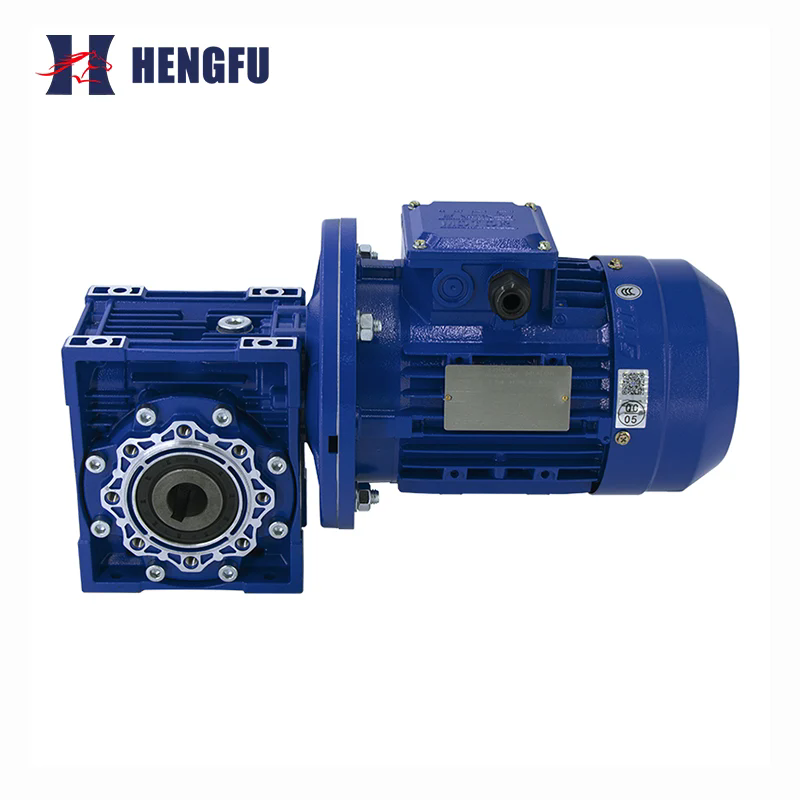
Table of Contents
What Is a Worm Gear Reducer?
A worm gear reducer is a mechanical transmission device designed to reduce motor speed while increasing output torque. It consists mainly of two components: a worm shaft and a worm wheel. The worm resembles a screw, while the worm wheel functions similarly to a gear.
When the worm rotates, it drives the worm wheel through sliding contact, creating significant speed reduction in a compact housing. This design allows worm gear reducers to deliver smooth operation and excellent load-handling capability even in limited installation spaces.
Many industries prefer worm gear reducers because they provide stable transmission, low vibration, and reliable self-locking characteristics for vertical lifting or positioning applications.
For professional industrial transmission solutions, Hengfu offers durable and high-performance worm gear reducer products suitable for multiple industrial environments.
How Does a Worm Gear Reducer Work?
The working principle of a worm gear reducer is based on the interaction between the worm shaft and the worm wheel. The motor powers the worm shaft, which rotates and transfers motion to the worm wheel. Because of the unique angular arrangement between these two parts, the output speed decreases significantly while torque increases.
The reduction ratio depends on the number of teeth on the worm wheel and the number of threads on the worm shaft. Higher ratios result in lower output speed and greater torque multiplication.
| Component | Function |
|---|---|
| Worm Shaft | Transfers rotational input from the motor |
| Worm Wheel | Receives motion and reduces speed |
| Housing | Protects internal components and supports lubrication |
| Bearings | Reduce friction and support rotational stability |
One important feature of worm gear reducers is self-locking capability. In certain reduction ratios, the output shaft cannot drive the input shaft backward, which increases operational safety in lifting systems and inclined conveyors.
Key Benefits of Worm Gear Reducers
Compact Structure
Worm gear reducers provide high reduction ratios in a small installation footprint, making them ideal for space-constrained machinery.
Low Noise Operation
The sliding transmission structure reduces impact and vibration, resulting in quieter equipment performance.
High Torque Output
These reducers effectively convert high-speed motor rotation into powerful low-speed torque for heavy-duty applications.
Self-Locking Function
Certain models prevent reverse rotation, improving operational safety and reducing mechanical risks.
Common Industrial Applications
Worm gear reducers are highly versatile and can be integrated into various industrial systems. Their stable operation and compact design make them suitable for continuous-duty applications.
- Conveyor systems
- Packaging machinery
- Food processing equipment
- Agricultural machinery
- Elevators and lifting systems
- Automatic gates and doors
- Textile machinery
- Material handling equipment
- Mining and heavy industrial systems
In automated production environments, worm gear reducers help maintain precise speed control while minimizing equipment vibration and wear.
Many manufacturers select Hengfu worm gear reducers for their stable performance, durable construction, and adaptability across multiple industrial sectors.
How to Choose the Right Worm Gear Reducer
Selecting the correct worm gear reducer requires careful evaluation of operational conditions and technical requirements. A poorly matched reducer can lead to overheating, reduced efficiency, and premature component failure.
| Selection Factor | Why It Matters |
|---|---|
| Reduction Ratio | Determines output speed and torque |
| Load Capacity | Ensures stable performance under operating loads |
| Installation Direction | Affects lubrication and heat dissipation |
| Working Environment | Dust, moisture, and temperature impact durability |
| Motor Compatibility | Ensures efficient power transmission |
Businesses should also consider energy efficiency, maintenance accessibility, and future production expansion when selecting transmission systems.
You can explore more product details here: https://www.hengfu-motors.com/worm-gear-reducer.html
Maintenance Tips for Long-Term Performance
Regular maintenance is essential for maximizing reducer lifespan and preventing unexpected downtime.
- Check lubrication levels regularly.
- Inspect seals for oil leakage.
- Monitor operating temperature.
- Clean dust and debris around the housing.
- Verify shaft alignment periodically.
- Replace worn bearings and gears promptly.
Using high-quality lubricants and following proper maintenance intervals can significantly reduce operational costs and improve equipment reliability.
Worm Gear Reducer vs Other Gear Reducers
| Feature | Worm Gear Reducer | Helical Gear Reducer | Planetary Reducer |
|---|---|---|---|
| Noise Level | Low | Medium | Medium |
| Compact Design | Excellent | Good | Excellent |
| Self-Locking | Available | No | No |
| Torque Capacity | High | High | Very High |
FAQ
Can a worm gear reducer handle heavy loads?
Yes. Worm gear reducers are specifically designed to increase output torque and support heavy-load industrial applications.
Why are worm gear reducers quieter?
Their sliding transmission mechanism reduces vibration and impact noise compared to some traditional gear systems.
Do worm gear reducers require regular lubrication?
Yes. Proper lubrication minimizes friction, prevents overheating, and extends service life.
What industries commonly use worm gear reducers?
Industries including manufacturing, agriculture, logistics, food processing, packaging, and material handling widely use them.
Conclusion
Worm gear reducers play an essential role in modern industrial transmission systems by delivering efficient speed reduction, stable torque output, compact installation, and reliable operational performance. Their versatility makes them suitable for a wide range of industrial machinery and automation equipment.
As industrial demands continue to increase, selecting a durable and professionally engineered reducer becomes even more important for maintaining productivity and minimizing downtime.
Looking for reliable worm gear reducer solutions for your industrial applications?
Hengfu provides high-quality worm gear reducers designed for efficiency, durability, and long-term performance. Whether you need customized transmission solutions or technical support for your machinery systems, our professional team is ready to assist you.
Contact us today to discuss your project requirements and discover the right transmission solution for your business.