

How Does a Self-healing Shunt Capacitor Improve Power System Reliability?
2026-06-08
Modern power systems demand stable voltage, reduced energy losses, and long-term operational reliability. In industrial plants, substations, renewable energy projects, and commercial facilities, reactive power management plays a critical role in maintaining efficient electrical performance. A Self-healing Shunt Capacitor has become one of the most trusted solutions for power factor correction and reactive power compensation because of its unique ability to recover from localized dielectric faults automatically.
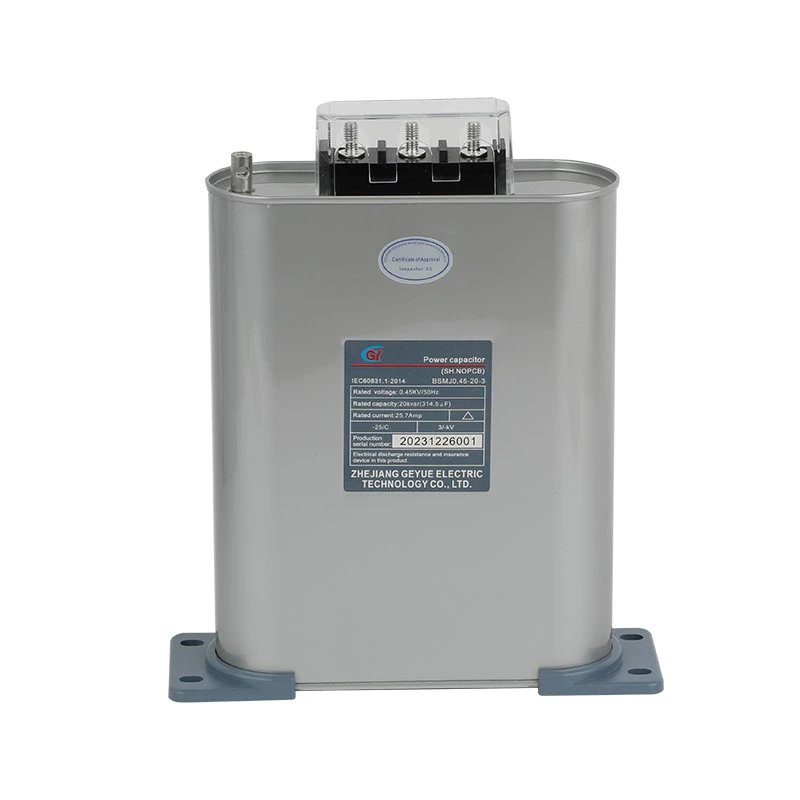
Unlike conventional capacitors that may suffer permanent damage from minor insulation breakdowns, self-healing designs can isolate fault points and continue operating safely. This capability significantly extends service life, reduces maintenance requirements, and minimizes unexpected downtime.
This article explains how self-healing shunt capacitors work, their advantages, applications, selection criteria, and why they are increasingly preferred in modern electrical infrastructure.
Table of Contents
- What Is a Self-healing Shunt Capacitor?
- How Does the Self-healing Mechanism Work?
- Key Benefits of Self-healing Shunt Capacitors
- Comparison with Conventional Capacitors
- Common Industrial Applications
- How to Select the Right Capacitor
- Maintenance and Operational Tips
- Future Trends in Reactive Power Compensation
- Frequently Asked Questions
What Is a Self-healing Shunt Capacitor?
A self-healing shunt capacitor is a power capacitor designed to provide reactive power compensation while possessing the ability to automatically repair minor dielectric breakdowns within its internal structure. The capacitor typically uses metallized polypropylene film as the dielectric material.
During operation, voltage stress, transient surges, or aging may create a localized fault within the dielectric layer. Instead of causing catastrophic failure, the metallized layer surrounding the fault vaporizes instantly, isolating the defective area while allowing the capacitor to continue functioning.
This technology greatly enhances operational safety and reliability compared to traditional capacitor constructions.
Self-healing shunt capacitors are commonly used in:
- Power factor correction systems
- Electrical substations
- Industrial manufacturing plants
- Renewable energy installations
- Commercial buildings
- Utility transmission and distribution networks
How Does the Self-healing Mechanism Work?
The self-healing process is the defining feature of these capacitors. It occurs automatically within microseconds after a localized dielectric fault appears.
- The dielectric experiences a temporary breakdown caused by electrical stress.
- A high current density forms around the fault point.
- The thin metallized electrode surrounding the fault evaporates.
- The damaged area becomes electrically isolated.
- Normal capacitor operation continues without major performance loss.
Because the damaged region is extremely small compared to the total electrode surface area, the overall capacitance reduction is negligible. This allows the capacitor to maintain stable performance throughout its service life.
The result is enhanced durability, improved operational continuity, and reduced risk of sudden equipment failure.
Key Benefits of Self-healing Shunt Capacitors
Organizations seeking reliable reactive power compensation often choose self-healing technology because it addresses several common operational challenges.
| Benefit | Description | Business Impact |
|---|---|---|
| Long Service Life | Automatic fault isolation reduces cumulative damage. | Lower replacement costs. |
| Improved Reliability | Continues operating despite localized faults. | Reduced downtime. |
| Enhanced Safety | Prevents fault propagation. | Better system protection. |
| Stable Power Factor | Maintains reactive power compensation efficiency. | Lower energy penalties. |
| Reduced Maintenance | Fewer failures and inspections required. | Lower operational expenses. |
These advantages make self-healing capacitors particularly valuable in mission-critical electrical systems where reliability directly impacts productivity and profitability.
Comparison with Conventional Capacitors
Understanding the differences between conventional capacitors and self-healing shunt capacitors helps engineers make informed purchasing decisions.
| Feature | Conventional Capacitor | Self-healing Shunt Capacitor |
|---|---|---|
| Fault Recovery | No | Yes |
| Operational Reliability | Moderate | High |
| Expected Service Life | Shorter | Longer |
| Maintenance Frequency | Higher | Lower |
| Resistance to Voltage Stress | Limited | Excellent |
The self-healing design significantly improves operational resilience, especially in environments where voltage fluctuations and switching events occur frequently.
Common Industrial Applications
Self-healing shunt capacitors support a wide range of electrical systems requiring efficient reactive power management.
- Manufacturing Facilities: Improve power factor and reduce utility charges.
- Power Utilities: Stabilize voltage across transmission and distribution networks.
- Wind Farms: Support reactive power compensation for grid compliance.
- Solar Power Plants: Improve energy conversion efficiency.
- Mining Operations: Enhance reliability in harsh environments.
- Commercial Complexes: Reduce energy losses and optimize electrical performance.
As energy efficiency requirements continue to increase, these capacitors are becoming essential components in modern power quality improvement projects.
How to Select the Right Self-healing Shunt Capacitor
Choosing the correct capacitor requires evaluating several technical parameters to ensure compatibility with the intended application.
| Selection Factor | Consideration |
|---|---|
| Rated Voltage | Must match or exceed system voltage requirements. |
| Capacitance Value | Determined by reactive power compensation needs. |
| Operating Temperature | Choose models suitable for environmental conditions. |
| Frequency | Verify compatibility with system frequency. |
| Installation Environment | Consider humidity, dust, vibration, and altitude. |
| Expected Service Life | Select products designed for long-term operation. |
Working with an experienced manufacturer helps ensure proper sizing, installation guidance, and long-term performance.
Maintenance and Operational Tips
Although self-healing shunt capacitors require less maintenance than traditional alternatives, regular inspections remain important.
- Monitor capacitor bank temperatures.
- Inspect terminals for corrosion and loose connections.
- Measure capacitance periodically.
- Check for abnormal swelling or leakage.
- Ensure proper ventilation within capacitor cabinets.
- Verify harmonic levels in the power system.
Preventive maintenance helps maximize service life and ensures stable reactive power compensation performance.
Future Trends in Reactive Power Compensation
The growing demand for smart grids, renewable energy integration, and energy-efficient industrial operations is driving innovation in capacitor technology.
Future self-healing shunt capacitors are expected to feature:
- Higher energy density designs
- Advanced dielectric materials
- Enhanced thermal management
- Digital monitoring capabilities
- Improved harmonic resistance
- Longer operational lifespans
These developments will further strengthen the role of self-healing capacitors in modern power quality solutions.
Frequently Asked Questions
Q1: What makes a self-healing shunt capacitor different from a standard capacitor?
Its metallized film structure can automatically isolate localized dielectric faults, allowing continued operation and significantly extending service life.
Q2: Can self-healing capacitors completely eliminate failures?
No. They greatly reduce the impact of minor dielectric faults, but proper design, installation, and maintenance are still necessary for optimal performance.
Q3: Are self-healing shunt capacitors suitable for renewable energy systems?
Yes. They are widely used in solar and wind energy projects for reactive power compensation and voltage stabilization.
Q4: How long do self-healing shunt capacitors typically last?
Service life depends on operating conditions, but high-quality units generally provide significantly longer operational lifespans than conventional capacitor technologies.
Q5: Why is power factor correction important?
Power factor correction reduces energy losses, improves electrical efficiency, enhances system capacity utilization, and may lower utility penalty charges.
Conclusion
A Self-healing Shunt Capacitor is a highly effective solution for improving power factor, reducing reactive power losses, and enhancing overall system reliability. Its ability to automatically recover from localized dielectric faults provides significant advantages in safety, longevity, and operational continuity.
Whether used in utility networks, industrial facilities, renewable energy installations, or commercial buildings, self-healing technology delivers dependable performance under demanding electrical conditions. By selecting the right capacitor and following proper maintenance practices, organizations can achieve greater efficiency and long-term value from their power systems.
Geyue Electric specializes in high-quality capacitor solutions designed for modern power systems. If you are looking for reliable self-healing shunt capacitors, customized reactive power compensation solutions, or expert technical support, contact us today to discuss your project requirements and discover how Geyue Electric can help improve the efficiency, stability, and reliability of your electrical infrastructure.