

How Does a Compound Switch Improve Power Management?
2026-03-18
Summary: A Compound Switch is a key component in modern low-voltage power systems. It enhances reactive power compensation, ensures precise capacitor switching, and improves overall grid efficiency. This article explores the principles, types, benefits, and applications of Compound Switches, helping industry professionals optimize power management strategies.
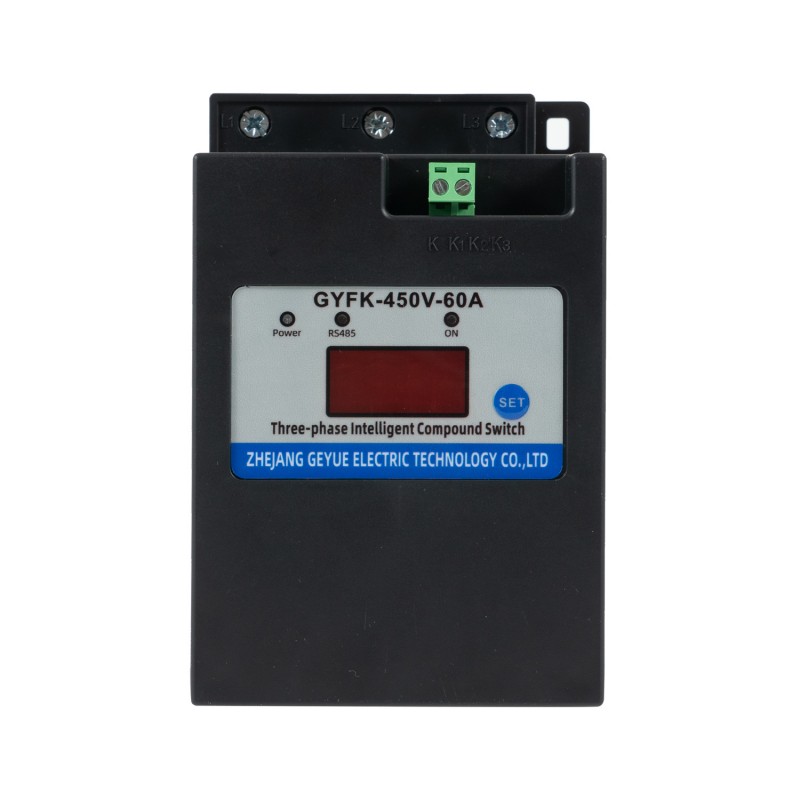
Table of Contents
- Introduction to Compound Switch
- Working Principle
- Types of Compound Switch
- Key Benefits
- Applications
- Technical Parameters
- Frequently Asked Questions
- Conclusion & Contact
Introduction to Compound Switch
Compound Switches are intelligent low-voltage switching devices used to control capacitor banks in power distribution systems. They combine the advantages of thyristors and AC contactors, offering fast switching, high reliability, and precise control. Companies like Geyue specialize in manufacturing these switches, providing advanced solutions for both industrial and civil applications.
Modern Compound Switches support sectional switching of multi-level capacitors, ensuring optimized reactive power compensation and preventing over-compensation or under-compensation. They are a vital part of maintaining power quality, reducing line losses, and achieving energy efficiency.
Working Principle
The primary function of a Compound Switch is to connect or disconnect capacitor banks from the electrical network according to reactive power demand. Key operational features include:
- Intelligent Control: Integrated with controllers to dynamically monitor grid voltage and reactive power.
- Fast Switching: Combines thyristor response with contactor reliability for precise capacitor activation.
- Adaptive Compensation: Adjusts compensation levels in real-time to maintain stable power factor.
By continuously adapting to load fluctuations, Compound Switches improve grid stability and enhance overall power management efficiency.
Types of Compound Switch
Different Compound Switch designs are optimized for specific system requirements. Common types include:
- Three-Phase Intelligent Compound Switch: Used for delta-connected capacitor banks in industrial settings.
- Split-Phase Compound Switch: Designed for star-connected capacitor banks in civil and commercial applications.
- Inrush-Free Current Switch: Prevents current surges during switching, extending capacitor and network lifespan.
Key Benefits
Implementing a Compound Switch offers numerous advantages:
- Optimizes power factor and reduces energy losses.
- Ensures reliable capacitor bank switching with minimal downtime.
- Supports multi-level and sectional switching for fine-tuned reactive power management.
- Integrates with intelligent controllers for automated monitoring and control.
- Promotes environmentally-friendly energy efficiency and supports new energy integration.
Applications
Compound Switches are widely applied in:
- Industrial power distribution systems
- Commercial buildings with large capacitor banks
- Renewable energy integration and microgrids
- Reactive power compensation in municipal and utility grids
By ensuring accurate and efficient power management, Compound Switches help operators reduce operational costs while improving system reliability.
Technical Parameters
| Parameter | Typical Value | Description |
|---|---|---|
| Voltage Rating | 250V – 450V | Applicable low-voltage range for three-phase and split-phase applications |
| Current Rating | 16A – 125A | Maximum switching current capacity for different capacitor banks |
| Switching Mode | Thyristor + AC Contactor | Ensures fast and reliable capacitor switching |
| Standards Compliance | GB/T 14048.4-2010 | National safety and performance standards for low-voltage switches |
| Control | Intelligent Controller Integration | Dynamic monitoring and adaptive reactive power management |
Frequently Asked Questions
Q1: How does a Compound Switch differ from a traditional contactor?
A: Compound Switches integrate thyristors with contactors, providing faster, precise switching, and adaptive reactive power compensation, unlike conventional contactors which are purely mechanical.
Q2: Can a Compound Switch handle multiple capacitor banks?
A: Yes, most Compound Switches support sectional and multi-level switching, allowing refined compensation across multiple banks.
Q3: Is installation and maintenance complex?
A: Modern designs focus on plug-and-play installation with intelligent monitoring, minimizing maintenance efforts while maximizing operational reliability.
Conclusion & Contact
Compound Switches are essential devices for modern power management, combining precision, intelligence, and energy efficiency. Geyue provides innovative solutions with reliable, high-performance switches for diverse industrial and commercial needs.
Enhance your power system’s efficiency and reliability today—contact us to explore our full range of Compound Switch products and tailored solutions.