

How do I choose Electrical Switchgear that boosts uptime and lowers total cost?
2025-11-28
When I plan a substation or MCC upgrade, I start by mapping failure modes, that habit led me to look for partners who solve real-world constraints like tight rooms, fast racking, and clean arc paths. Over the last few years, I’ve found that working with SYHF on projects involving Electrical Switchgear makes the design phase calmer and the commissioning phase shorter, because the engineering choices line up with how maintenance actually happens on site. In this guide, I’ll unpack the questions I ask before I lock in an Electrical Switchgear specification and share the checklists I use to keep bids honest and life-cycle costs predictable. You can explore their product family any time, but first let’s stress-test the essentials of Electrical Switchgear.
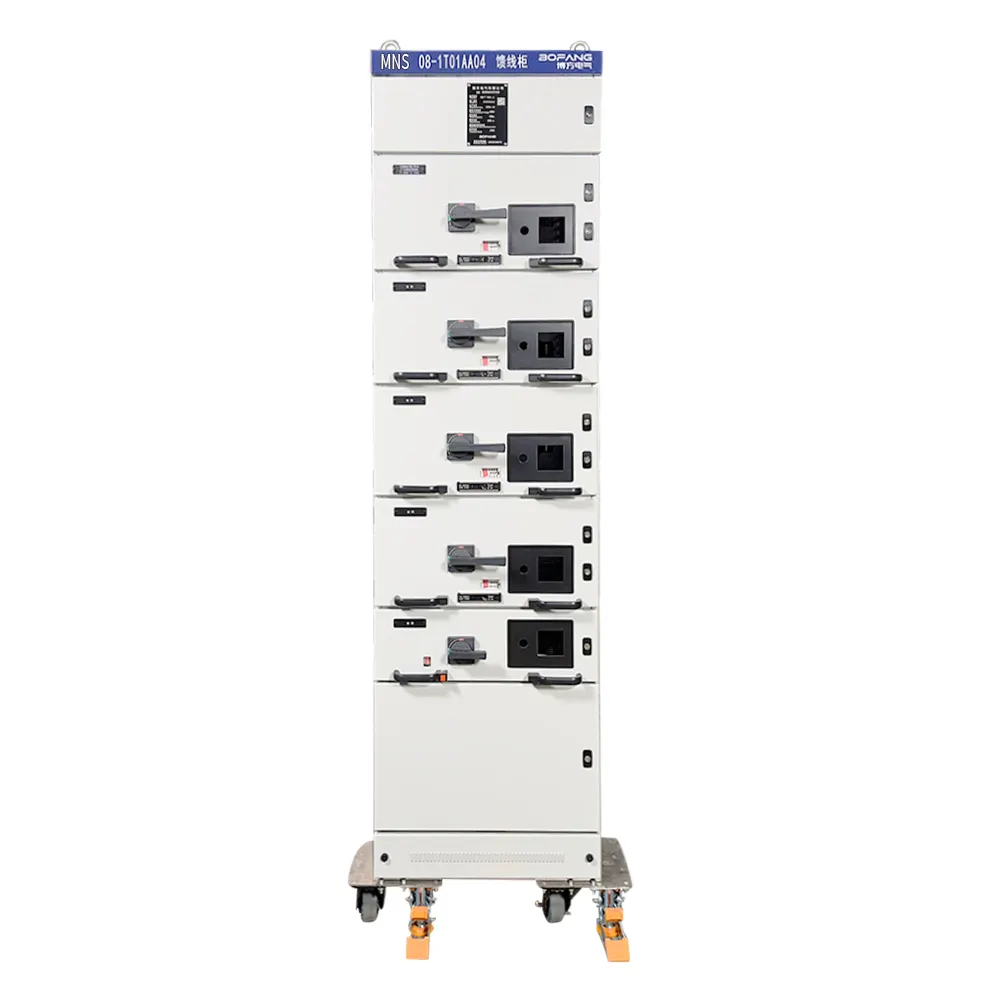
What problems does Electrical Switchgear actually solve for my facility?
I look at switchgear as a risk-shaping tool. The right lineup does four things particularly well:
- Interrupts and isolates faults fast so upstream equipment and people stay safe.
- Segments loads into maintainable blocks so I can keep part of the plant live during service.
- Standardizes protection settings so coordination studies remain stable over expansions.
- Creates predictable maintenance windows with withdrawable or fixed patterns that match staffing reality.
When I evaluate a new Electrical Switchgear bid, I tie each feature back to one of those four outcomes. If it doesn’t move one of them, it’s noise.
Which specifications matter most when I size Electrical Switchgear for my site?
- Short-circuit rating and Icw — I confirm available fault current at the line side and pick gear that carries and clears it with margin.
- Arc-flash mitigation — I prefer designs with tested internal arc classification, fast actuation, and clear exhaust paths.
- Ingress and contamination control — Dust, humidity, and corrosives drive enclosure selection and busbar insulation choices.
- Form factor and maintainability — Depth, front access options, and racking mechanisms decide whether outages are minutes or days.
- Standards and type tests — I verify conformity to relevant standards and insist on accessible routine test records.
How do LV, MV, and HV Electrical Switchgear compare for typical applications?
| Use case | Recommended switchgear type | Typical rating window | Why it fits | Notes for bids |
|---|---|---|---|---|
| Process lines with frequent maintenance | Low-voltage metal-enclosed, withdrawable breakers | Up to 690 V, 50–100 kA ICC | Fast isolation and minimal downtime | Specify racking interlocks and shutters |
| Campus medium-voltage distribution | Metal-clad MV with vacuum interrupters | 3.3–24 kV, 16–40 kA | High reliability and clear segregation | Ask for arc-resistant tested options |
| Compact commercial retrofits | Front-access LV switchgear | 480/400 V, 42–65 kA | No rear clearance needed | Confirm heat rise at full density |
| Utility interconnect and renewables | Outdoor MV switchgear with sealed bus | 13.8–36 kV, 25–40 kA | Weatherproof and easy to service | Specify stainless hardware and coatings |
What design choices help my Electrical Switchgear meet safety goals without bloating cost?
- Internal arc channels — Direct venting up and away from the operator cuts risk during faults.
- Shutters and mechanical keying — Physical barriers beat stickers; I avoid anything that depends on memory.
- Thermal monitoring — Hot-spot sensors on joints and bus reduce unplanned outages.
- Withdrawable vs fixed strategy — I balance capex against outage minutes; drawer patterns pay off where uptime is king.
- Clear labeling and wiring — Panel legends and terminal numbering save hours across the life of the gear.
How do I install and commission Electrical Switchgear so it starts clean and stays reliable?
- Verify bus torque, insulation clearances, and CT orientation before energization.
- Run protection function tests with end-to-end secondary injection and document pickup values.
- Check ventilation paths and cable terminations for bend radius compliance.
- Capture baseline IR images and partial discharge readings for future comparisons.
For fast turnarounds, I request factory witness tests and shipping splits that match my elevator or door constraints. That keeps surprises off the loading dock when the Electrical Switchgear arrives.
When should I pick fixed pattern versus withdrawable Electrical Switchgear for operations?
- Withdrawable — Best where I need to swap a breaker under tight time limits or share spares across feeders.
- Fixed — Ideal for cost-sensitive feeders with stable loads and long maintenance windows.
In mixed plants, I often specify withdrawable for critical feeders and fixed for non-critical. It keeps the line as lean as possible while protecting uptime where it matters most.
What purchasing checklist keeps my Electrical Switchgear bids comparable and fair?
- List the exact fault duty at the line and load sides and require margin statements.
- Ask for internal arc testing details and venting direction diagrams.
- Set enclosure, paint system, and hardware material requirements to match the environment.
- Define breaker brand compatibility and spare parts lead times.
- Request factory test records and a sample maintenance plan with labor hours.
Where does Electrical Switchgear return value beyond the purchase price?
- Fewer shutdowns — Better coordination and easier isolation reduce lost production hours.
- Lower maintenance burden — Clean access paths and smart monitoring shrink PM time.
- Safer interventions — Clear interlocks and arc paths protect people and shorten incident recovery.
- Smoother expansions — Modular bus and standardized compartments make future tie-ins predictable.
That’s why I lean toward vendors who treat the lineup as a long-term platform. In my experience, teams like SYHF design with the next retrofit in mind, which keeps total cost of ownership in check across decades of service.
Do you want a tailored Electrical Switchgear plan that fits your site and budget?
If you’re planning a new lineup, a retrofit, or simply want a second opinion on a one-line, send me your single-line diagram and the latest fault-current study. I’ll map your risks to a clear spec, align features with outcomes, and show where a smarter Electrical Switchgear choice saves the most time and money. Ready to move from guesswork to a clean, auditable design — contact us and tell me what you are building.