

How Can an Automatic Power Factor Controller Improve Electrical Efficiency?
2026-06-17
Abstract
An Automatic Power Factor Controller (APFC) is a critical solution for modern electrical distribution systems seeking to improve energy efficiency, reduce electricity costs, and stabilize power quality. In industrial and commercial environments, poor power factor leads to higher utility penalties, increased energy losses, and reduced system capacity. This article explains how APFC systems work, why they are essential, and how they can optimize electrical performance across various applications. It also provides guidance on selection, installation, and maintenance while highlighting the engineering approach of Geyue Electric in delivering reliable APFC solutions.
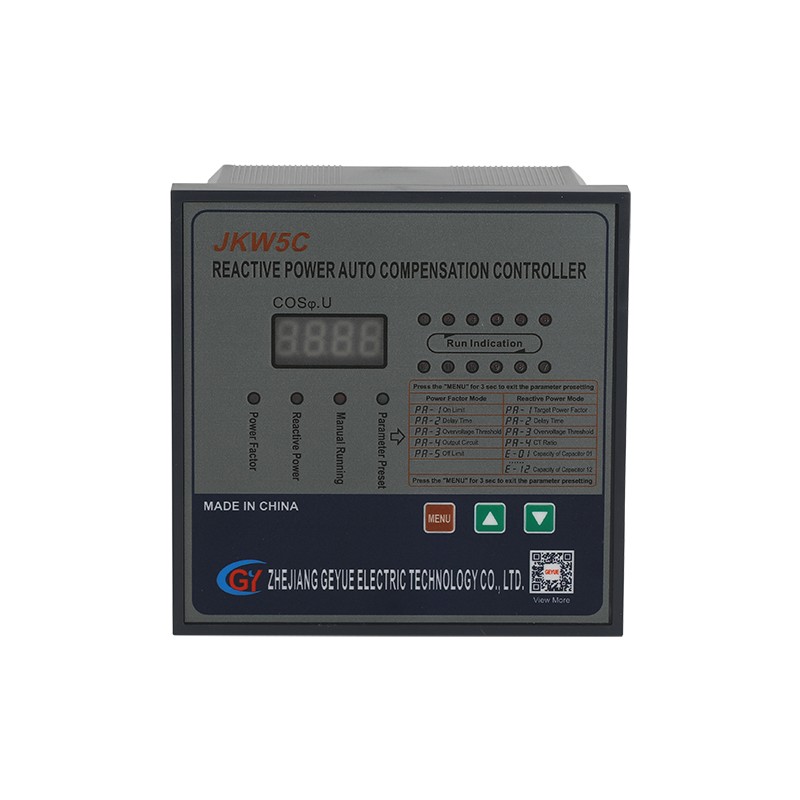
Table of Contents
- 1. What is an Automatic Power Factor Controller?
- 2. Why Power Factor Matters in Electrical Systems
- 3. How an APFC System Works
- 4. Key Components of APFC Panels
- 5. Benefits of Using APFC Technology
- 6. Industrial and Commercial Applications
- 7. How to Choose the Right APFC Panel
- 8. Installation and Maintenance Guidelines
- 9. Common Problems and Troubleshooting
- 10. Why Geyue Electric APFC Solutions Stand Out
- FAQ
- Conclusion
1. What is an Automatic Power Factor Controller?
An Automatic Power Factor Controller is an intelligent electronic device used in electrical power systems to maintain the power factor close to unity by automatically switching capacitor banks in and out of the circuit. It continuously monitors reactive power demand and dynamically compensates for inductive loads such as motors, transformers, and inductive machinery.
Unlike manual capacitor switching systems, APFC panels operate in real-time, ensuring optimal compensation without human intervention. This improves system stability and reduces unnecessary power consumption.
2. Why Power Factor Matters in Electrical Systems
Power factor represents the efficiency with which electrical power is converted into useful work output. A low power factor indicates poor utilization of electrical energy, resulting in:
- Increased electricity bills due to utility penalties
- Higher transmission losses in cables and transformers
- Reduced load-carrying capacity of electrical infrastructure
- Overheating of electrical equipment
| Power Factor Level | System Impact | Energy Efficiency |
|---|---|---|
| 0.7 – 0.8 | High losses, utility penalties | Poor |
| 0.85 – 0.95 | Moderate efficiency | Acceptable |
| 0.98 – 1.0 | Optimal system performance | Excellent |
3. How an APFC System Works
An APFC system operates by continuously measuring the load’s reactive power and power factor using a microcontroller-based relay. When the power factor drops below a predefined threshold, the controller automatically connects capacitor banks to compensate for the reactive power demand.
When the load decreases or becomes more resistive, the system disconnects unnecessary capacitors to avoid overcompensation.
- Step 1: Measurement of voltage and current signals
- Step 2: Calculation of real-time power factor
- Step 3: Decision-making via intelligent controller
- Step 4: Switching capacitor stages ON/OFF
4. Key Components of APFC Panels
A typical Automatic Power Factor Controller panel consists of several integrated components designed for precision control and durability.
- Microcontroller-based APFC relay
- Capacitor banks (fixed or automatic stages)
- Switching devices (contactors or thyristors)
- Current transformers (CTs)
- Circuit protection devices
Each component plays a vital role in ensuring stable compensation and system safety.
5. Benefits of Using APFC Technology
Installing an APFC system provides significant operational and financial advantages:
- Reduction in electricity bills through penalty avoidance
- Improved system capacity utilization
- Enhanced voltage stability
- Extended lifespan of electrical equipment
- Reduced carbon footprint due to improved efficiency
In large industrial facilities, even a small improvement in power factor can result in substantial annual savings.
6. Industrial and Commercial Applications
Automatic Power Factor Controllers are widely used across industries where inductive loads are prevalent.
- Manufacturing plants
- Steel and metal processing industries
- Commercial buildings and shopping malls
- Hospitals and data centers
- Water treatment facilities
These environments benefit significantly from stable power factor correction and reduced energy wastage.
7. How to Choose the Right APFC Panel
Selecting the correct APFC system depends on several technical and operational factors:
| Selection Factor | Description |
|---|---|
| Load Type | Inductive or mixed loads require different compensation levels |
| System Capacity | Total kVAR requirement determines panel size |
| Switching Technology | Contactors vs. thyristor-based switching |
| Harmonic Distortion | Presence of harmonics may require detuned reactors |
8. Installation and Maintenance Guidelines
Proper installation ensures long-term reliability and safety of APFC systems. Key practices include:
- Correct placement near load centers
- Proper CT wiring and polarity checks
- Adequate ventilation for capacitor banks
- Regular inspection of contactors and capacitors
Preventive maintenance should include periodic thermal checks and capacitor health monitoring to avoid system degradation.
9. Common Problems and Troubleshooting
Even well-designed APFC systems may face operational issues. Common problems include:
- Overcompensation leading to leading power factor
- Capacitor failure due to overheating
- Incorrect CT placement causing measurement errors
- Frequent switching due to unstable load patterns
These issues can typically be resolved through recalibration, component replacement, or system redesign.
10. Why Geyue Electric APFC Solutions Stand Out
Geyue Electric specializes in advanced power factor correction technologies designed for industrial-grade reliability and efficiency. Their APFC systems are engineered with precision control algorithms, high-quality capacitor banks, and robust protection mechanisms to ensure long-term stability in demanding environments.
By focusing on intelligent switching logic and high-performance components, Geyue Electric helps enterprises achieve optimized energy utilization and reduced operational costs.
FAQ
Q1: What happens if power factor is not corrected?
It leads to higher electricity bills, reduced system efficiency, and possible penalties from utility providers.
Q2: Can APFC systems be used in small industries?
Yes, APFC systems are scalable and can be implemented in both small and large installations.
Q3: How long does an APFC system last?
With proper maintenance, capacitor banks typically last 5–10 years depending on operating conditions.
Q4: Does APFC reduce energy consumption?
It does not reduce active power consumption directly but improves overall energy efficiency by minimizing reactive power losses.
Conclusion
Automatic Power Factor Controllers play a vital role in modern electrical infrastructure by enhancing energy efficiency, stabilizing voltage, and reducing operational costs. As industries continue to prioritize energy optimization, APFC systems have become essential components in power distribution networks.
Geyue Electric continues to deliver reliable and intelligent APFC solutions tailored for industrial and commercial needs, ensuring long-term performance and energy savings.
For customized solutions, system consultation, or technical support, contact Geyue Electric today — contact us and take the next step toward optimized electrical efficiency.